‘Hollywood North…east’? Ottawa vies to be a moviemaking capital

Within the daytime serenity of Ottawa’s Shenkman Arts Centre, the phone never stops ringing in Roch Brunette’s small office.

With a one-person staff, Brunette is the general manager of the Ottawa Gatineau Film and Television Development Corporation (OGTF), a government-funded organization formed in 2003 to connect foreign film producers to the resources and locations they need to shoot in Ottawa.


Papineau Street in Gatineau lends a vintage look for the filming of Jack Kerouac’s On the Road, starring Garrett Hedlund (centre).

Brunette does a lot more than location scouting. He actively “sells” Ottawa to filmmakers, spending most of his time personally calling and emailing people in Los Angeles and New York City, then helping them scout locations once they agree to check out Ottawa. Since government dollars don’t go very far, Brunette can’t travel much and so does most of the legwork from his desk.

His stamina seems to be paying off, though. “What we’re seeing is a lot more direct calls from New York–based producers because they heard about Ottawa being a cool place to shoot,” he says.

Between 2008 and 2009, foreign location and service production decreased by 18.2 percent in Canada, according to a Canadian Media Production Association study. Brunette says 2009 was a bad year for Ottawa, too. But in September–November 2010 the city suddenly saw about 12 months’ worth of filmmaking, with $50 million in production volume of  hitting the city in just three months.

Part of this new-found attention from American filmmakers is due to the good word on two big productions successfully shot in town this summer.


With two major U.S. productions here in summer 2010, headlines claimed Ottawa as the newest Canadian filmmaking hotspot.

In August, film crews made over Gatineau to look like 1940s Colorado to shoot the movie version of Jack Kerouac’s classic novel, On the Road, a $25 million film produced by Francis Ford Coppola and directed by Walter Salles, starring Twilight alumna Kristen Stewart. In the same month, L.A.-based producer Aaron Ryder shot his latest horror flick, The House at the End of the Street, in Ottawa, as a co-production with local company Zed Filmworks.

Both producers found what they were looking for—from locations to talented actors, extras and editing crews—in Ottawa: proof that the city just might have what it takes to be a filmmaking hotspot.

“He’s going to come back,” Brunette says of Ryder, whose film crew didn’t really know Ottawa existed before the summer. “The first question these producers ask when you mention Ottawa is, ‘What is Ottawa?’ But then they get here, they shoot their movies and they ask, ‘Where were you all this time? How come you weren’t on the map?’”

Located between two well-established film hubs, Toronto and Montreal, Ottawa is often off the map for foreign film producers simply because it’s too small, says Peter Finestone, commissioner of the Toronto Film and Television Office.

“Ottawa has a variety of looks on any given day, but Ottawa maxes out pretty quickly compared to Toronto,” he says. “There is much more infrastructure here [in Toronto]”.

‘We’re seeing a lot more calls from New York–based producers because they heard about Ottawa being a cool place to shoot.’ – Roch Brunette

Another obstacle for local production is the presence of federal government, says location scout Ainslie S. Wiggs.

“I find it very challenging to work here because people have a government mentality, and the art of filmmaking is just something that doesn’t necessarily fit into that box,” she says. Because of the three levels of government in Ottawa, she says there are more permits needed for shooting on streets, especially in the downtown core near Parliament Hill

However, Brunette says crews are starting to choose Ottawa over Toronto because rental space is cheaper, locations tend to be closer together and there’s less traffic here.

Furthermore, Ottawa has appeal for film producers because of its attractive outdoor spaces and old-fashioned architecture. According to Wiggs, 19th-century buildings like the Museum of Nature have been used for period pieces, and bigger homes in the small towns outside the city often play host to productions.

Another boost to runaway production has been increased tax incentives. In 2007 the Ontario government increased foreign-service tax credits by 38 percent, according to FilmOntario.

And finally as a cause there is enhanced government support.  FilmOntario’s research efforts and work have led to an extra $200 million from the Ontario government for the province’s film industry for 2010–2012.

Ottawa’s recent growth in foreign film production can be measured in various ways: not least in its effect on local businesses. For example, Ottawa’s Zed Filmworks, a rising star in the Canadian production world, was founded in 2007 and has so far produced several films, with four in development in 2011. Meanwhile, Sound Venture Productions, which has been in Ottawa for 30 years mainly as a producer of government and corporate videos, recently expanded into film and television production.

Angie Sakla-Seymour, owner of local talent agency Angie’s Models and Talent, says she submitted four of her actors to audition for an American film shooting in Ottawa this fall and all four got small speaking roles.


Film star Lou Diamond Phillips (left) shoots a scene in Gatineau Park for the 2009 U.S. TV horror series Carny, set in Nebraska.

“It is night and day… it has grown so much in the past ten years,” she says. “It was slow when I started and they would just ask for extras for films, or they brought in actors from Toronto, Vancouver or Montreal, but it has totally evolved.”

Film productions are a blessing for the local economy, Brunette emphasizes. In its five days of shooting, On the Road put about $250,000 straight into the local business, he says. About half that money went to hotels, food and other expenses while the American crews shacked up in Ottawa.

But while the benefits for the city are clear, the OGFT still has a lot of obstacles to overcome in keeping local film production on the rise.

“Ottawa is certainly not perfect,” says Brunette, but after the past few years he says the OGFT knows how to connect film producers in the city with the resources they need. Location scout Wiggs agrees. She credits Brunette as a “driving force in this town to make it easier for people to come here and film.

And Brunette is on his way to opening another door for the local industry: a new facility for film production and other media industries in Ottawa. He hopes to gain government funding this year for the OGFT to build a multipurpose studio for film shooting, animation and special effects, scheduled to be in use by about 2012.

“We’ve got so much creative energy here in Ottawa,” he says. “Our mandate is to foster local community growth, while at the same time positioning Ottawa as film-friendly. This is how we can do it.”
To make your film, just wager all you own

There are those who might think Will Inrig’s struggle to get his latest project off the ground has to do with his age. He is, after all, the youngest filmmaker to ever have a feature project green-lighted by the National Film Board.

To judge Inrig on his youth alone would be to do him a disservice. The Ottawa-based 18 year old is hardly inexperienced in his craft; he has achieved more already than many will in their lifetimes. He directed his first feature-length documentary at 15 and was only 17 when he took home the top prize for high-school animation at the 2008 Ottawa International Animation Festival.


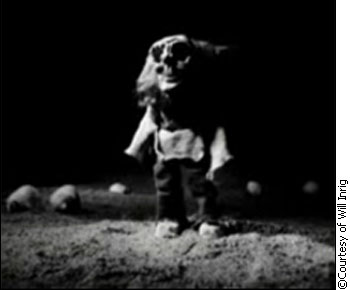
Inrig’s stop-motion film, The Depose of Bolskivoi Hovhannes, won a top prize at the 2008 Ottawa International Animation festival.

Inrig now finds himself facing his first professional roadblock. Production of his latest documentary feature — The Fantastic Ballet of the Mind and its Master, about the adult autistic mind and a little-studied phenomenon called “autistic fantasy” — has ground to a halt.

The troubles plaguing the production of the documentary are not the fault of its director. Rather, they are the result of a financially unstable cultural environment in Canada, one that’s hesitant to take a chance on emerging directorial talent. Those who are making movies are often doing so at great financial risk.

A passion deferred

The Fantastic Ballet of the Mind and its Master is a highly personal project for Inrig; his younger brother Ben is autistic.

It’s Ben who is featured in the doc’s opening scene. He stands up to his shoulders in the rushing waves of Lake Ontario at Sandbanks Provincial Park at sunset, his arms outstretched and his face rapturous, eyes fixed on something the audience can’t see.

“You look at his face and you realize that he’s not here,” Inrig said, voice cracking with emotion. “He’s somewhere else. But you look into his eyes and it’s just divine ecstasy. And there’s something quite beautiful in that, and there’s also something quite tragic. And that’s what I have to make a movie about.”


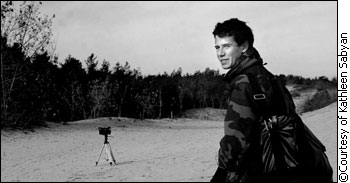
Inrig filming the opening scene of The Fantastic Ballet of the Mind and its Master at Sandbanks Provincial Park.

After receiving enough financial help from the NFB (largely in the form of access to post-production facilities) to produce a demo reel for the film, Inrig has found himself with neither the funds nor facilities needed to continue filming.

A national problem

Adam Symansky, an Oscar-winning producer with the Board and Inrig’s mentor, said the NFB has done everything it can to start Inrig off financially, but the next step is his to take.

“If we can help Will, it would be the sort of thing that the Board should be doing,” he said. “Whether we’ll be able to or not is still up for discussion.”

‘The project is excellent, the rest is going to come. I’ve lived my whole life with people with mental disabilities. What I’m quite positive I can do is bring people into that world; I can show them the soul of these autistics, their gentleness, nobility, dignity.’ — Will Inrig

For the moment, Symansky said, the Board can afford no more investment until Inrig starts on-location filming at an institution for autistic adults. This, however, would require more capital, leaving Inrig stuck in pre-production limbo.

The basic problem is that Canada’s national audio-visual producer has taken a series of financial hits in the past two decades. In 1996 the Board suffered a 32% cut to its operating budget, leading to job cuts and the permanent closure of one of its studios, dedicated to production by female filmmakers; since the early 2000s the Board has experienced a series of smaller budget cuts; today only one of its two Montreal headquarter buildings is in use.

According to the Board’s 2008–2009 to 2012–2013 mandate, “the constant erosion of the organization’s […] power results in a constant reduction of its capacity to deliver value to Canadians.”

The NFB isn’t the only Canadian cultural institution strapped for cash. Between 2006 and 2008 the Conservative government cut $45 million of arts and culture funding, an issue that figured prominently in the country’s 2008 election.

Inrig has approached virtually every major broadcaster and distributor in the country for capital, but the fact is that his project is risky.

Even if he does succeed in making Ballet the way he wants to, it’s obviously not a film destined to break box office records. During this time of economic duress, risky investment doesn’t seem to be in the cards. The response from potential investors has been always the same.

“Ballet looks like a unique and very ambitious film,” said distributor Kino International in a letter to Inrig. “We are interested in following the progress of your production and would like to see it upon completion.”

“We feel that Will’s film [. . .] will touch a wide audience of filmgoers who are looking for something compelling, and different,” documentary distributor Zeitgeist Films echoed. “We intend to view the film when it is finished and will strongly consider its potential for theatrical distribution at that time.”

Apart from small donations here and there — a corporate sponsorship from TELUS, a grant from the Ontario Arts Council and personal donations from Inrig’s high-school principal and from Global TV anchor Kevin Newman — no one seems willing to take the plunge and invest fully in the making of Inrig’s film.

So what does it take for an emerging filmmaker to make a movie in Canada these days? If Inrig, with all his potential, has stood for so long at a production standstill, what hope is there in Canada for other new filmmakers?

A risky solution

Two thousand and nine was Xavier Dolan’s year. The 20-year-old Quebecois actor aced first the Cannes Film Festival, where he took away a prize for outstanding new director, and then the Toronto International Film Festival, where his directorial debut, J’ai tué ma mère (“I killed my mother”), was well received by the public. In addition, the film was picked up by domestic distributor K Films Amérique and will be distributed theatrically and on DVD in the United States by Here Films in 2010.

The similarities between Dolan’s and Inrig’s films and between the filmmakers themselves are numerous. Like Inrig, Dolan drew on highly personal subject matter for inspiration. J’ai tué ma mère, which Dolan also wrote and starred in, is an autobiographical examination of a gay teenager’s rocky relationship with his infuriatingly kitschy mother.


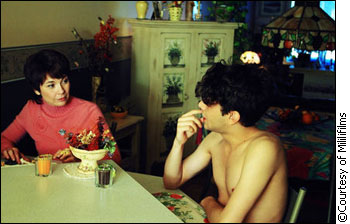
A scene from director Xavier Dolan’s acclaimed J’ai tué ma mère. Dolan put his life savings on the line to make the film.

“I wrote the screenplay to evacuate things, with mostly a cathartic intention,” he explained. “But then a friend read the project and told me that it should be a movie, rather than a little diary for myself.”

Like Inrig, Dolan has an intimate understanding of Canada’s entertainment industry, having acted throughout his childhood in Québécois films and television programs. Dolan too approached many potential investors with his film’s script, which he wrote when he was 17.

After submitting the project to the “usual funding agencies” and being rejected by all, Dolan took matters into his own hands. He was lucky enough to have saved over $100,000 from his acting career, and used those savings to bring his script to life. It was a huge risk, one with no guaranteed reward.

“The distributor and the producer associated with the project just backed out,” Dolan explained. “They had all the documents and papers ready, but it didn’t work out and they couldn’t do it with their own money because we just don’t have producers or directors putting their house on mortgage to save movies. But I had the urgency to do the movie. I paid for the movie myself. That was the base, all I had to start the movie.”

‘I paid for the movie myself. That was the base, all I had to start the movie.’ — filmmaker Xavier Dolan

Eventually, once production of the film was underway, Dolan resubmitted a proposal to Telefilm Canada, and the agency came on board to carry the film through to completion. Without their financial aid, it’s doubtful the film would have been completed, but it took Dolan accepting the initial risk to coax the cultural agency to step forward.

The cultural cost?

According to Roch Brunette, manager of the Ottawa-Gatineau Film and Television Development Corporation, aspiring filmmakers like Dolan and Inrig can’t rely on traditional organizations to make movies anymore. Independent filmmaking has never been an easy career choice, he explained, but now the artists who succeed will be those willing to risk everything to have their voice heard.

“There is money in this business regardless of what people are saying,” he insisted. “Broadcasters are putting a lot of projects on hold because they’re waiting on God knows what, but in the meantime directors like Will have to go forward with their projects.”

“Going forward” with no guarantees comes with the possibility of failure. But there is greater risk here than just to individual artists. What of the cultural cost?

The NFB has been publicly and federally criticized for being out of touch with what modern Canadian audiences want and are willing to pay to see. It’s not unaware of these criticisms and addresses them in its mandate, as well.

The NFB’s vision for the next three years is “[t]o ensure that [it] remains a vibrant cultural institution, necessary, relevant and vital.” The mandate is littered with words like “creative,” “emerging talent” and “challenging subject matter.”

Inrig and his documentary seem to be a manifestation of the sort of production even the NFB knows it needs, to survive cuts and losses; but he remains stuck in a financial quagmire. There is the very real possibility that his passion for his subject matter will never be put to film. And, had Dolan been unwilling to put his life’s savings on the line, it’s possible that his vision would have been ignored by Canada’s cultural funding agencies. How can the Canadian film industry hope to compete with the cinematic giant that is Hollywood if new cinematic voices are being silenced before they’re ever heard?

Running on a latte and a prayer

Inrig doesn’t have savings like Dolan’s to fall back on. He can’t afford that sort of risk. All that remains is his passion for Ballet and his belief that it should be made.

“The project is excellent, the rest is going to come,” he said confidently. “I’ve lived my whole life with people with mental disabilities. What I’m quite positive I can do is bring people into that world; I can show them the soul of these autistics, and their gentleness and their nobility, their dignity. These are some of the most dignified people I’ve ever met.”

The question then becomes not how an emerging filmmaker can hope to make a movie in Canada in the current economic climate, but rather, who has the drive to?

Related Links

National Film Board’s official website

Video of Will Inrig’s The Depose of Bolskivoi Hovhannes

Official trailer for Xavier Dolan’s J’ai tué ma mère