Ottawa’s boutiques fight to stay in fashion

Only a few years ago, Ottawa-born Stacey Bafi-Yeboa was a professional dancer, gracing the stages of Broadway and stealing movie scenes. But she found she had no comfortable yet fashionable clothing to dance in.


Bright hopes: Kania’s grand opening in November 2009.

Today Bafi-Yeboa walks under a different spotlight. Through solo effort and self-education, she launched the clothing line Kania four years ago. The line focuses on feminine, street style clothing that women can feel comfortable in, and is available throughout Canada and as far away as Chicago. And in November 2009, she opened her first Ottawa boutique, likewise called Kania, on York Street.

But Bafi-Yeboa isn’t alone. She is an example of a new trend in the nation’s capital: the resurgence of retail culture in the Byward Market. When it comes to fashion, there has been an increase in small, owner-operated fashion boutiques like Kania.

A “boutique” refers to a small shopping outlet, particularly one that specializes in elite, quality items.

“Boutiques allow people to make sense of fashion,” says Bafi-Yeboa. “It gives people a chance to pull different items from different areas.”

Byward Market: then and now

According to the Byward Market business improvement area, there are over 60 retailers in the Market that specialize in couture, fashion and clothing. And there are nearly 40 other shops that sell clothing as part of their merchandise.

The Byward Market – one of Canada’s oldest and largest markets – is a district in Ottawa’s downtown, bordered by Sussex Drive on the west and Cumberland Street on the east.


Cool and hot: Like other boutiques, Kania aims at a niche clientele.

Jasna Jennings, executive director of the Byward Market business improvement area, says the Market is trying to go back to its retail roots.

Established in 1826, the Market started out as a retail hub where consumers could purchase such staples as farm and food supplies, says Jennings.

However, she says, by the 1970s and into the early 1980s, the Market struggled due to a big shift of population from the urban core to the suburbs. Large shopping malls were subsequently built in the suburbs, and new shopping patterns developed.

“[People] were slowly moving away from small, independent shops to the big one-stop grocery stores, instead of going to the butcher, baker,” says Jennings.

As a result, an ailing Market turned to reclaiming nightlife as one solution. For some time, the Market has been recognized for its food and bar scene.

But in recent years, Jennings says, the Market is hoping to bring back smaller boutiques to add colour and variety to the area.

“A mix is necessary for the vitality and prosperity of the Market,” says Jennings.

And members of the local fashion scene say they want to be part of this retail resurgence.

‘Ottawa’s Soho’

This emerging Market boutique culture has largely come to fruition on Dalhousie Street. The arrival of boutiques has transformed Dalhousie into what some nickname “Ottawa’s Soho,” offering a bohemian, New York-inspired atmosphere to its clientele.

‘Boutiques allow people to make sense of fashion, to pull items from different areas.’ – owner-designer Stacey Bafi-Yeboa

Along Dalhousie Street, it is clear there are several fashion boutiques contributing to this movement, including Young Janes, Victoire and Workshop Studio + Boutique.

“People have gotten used to different price points and getting something local, something that is unique. There’s a real movement towards wanting products touched by the hands of artists, not from sweatshops,” says Christina Ballhorn.

Ballhorn is a co-owner of Workshop Studio + Boutique, which opened its doors in 2005. The artist-owned boutique was originally meant to provide a space where Ballhorn and business partner Bridget Remai could sell their creations, as independent designers, and remain living in Ottawa.

The emergence of a Market boutique culture corresponds to a growing market demand for fair-trade quality items.  Ballhorn says that her boutique focuses on products, hand-made by women, that are as local and as ethically-produced as possible.


Designer Bianca Wahab: “Just from what I’ve seen, I think people are tired of looking like everyone else.”

Also there is the uniqueness factor. “Just from what I’ve seen, I think people are just tired of looking like everyone else. It’s so easy to go somewhere and get something, and five other stores have it,” says Bianca Wahab, a Kania employee.

Wahab, a graduate of Richard Robinson Fashion Academy on Sussex Drive, is a new designer hoping to provide unique items to Ottawa’s fashion community. Along with working at Kania, she also registered her own company, Hartby, in June 2009. Hartby is a unique leather-accessories line of handbags, clutches, belts and similar items – all of which she custom makes herself.

Wahab says she’s noticed that many people in Ottawa want custom items.  “People want quality things and different things. But they also want their money spent on the right things, standard pieces that will last.”

Looking Fashion Forward


Inside Kania. Despite their charm, small boutiques in the Market face stiff competition from chain retail stores.

However, Jennings says, there are lingering concerns about the survival of retail in the Market, despite new stores consistently being encouraged to come set up shop there.

“The stores that we do have, well, we’d be remiss to say that they’re not in competition with big retailers,” says Jennings.

This is especially true beyond the consumer who already shops in the Market and is willing to pay for unique products, says Jennings. For instance, local quality products mean more expensive price points compared to a big-boxed store, while downtown parking may also be considered a drawback by some.

“Technically, if you make something on your own, it’s going to be higher priced than a big boxed store.  So you need people who are going to purchase it,” says Wahab.

Jennings also says restaurants generally pay more to rent space in the Market than a retail store would, because they make more revenue. As a result, owners of Market buildings are often more eager to draw restaurants as tenants.

But the fashion boutiques in the Market are looking to find ways around such challenges.

Ballhorn says the camaraderie shared among local designers and boutiques is critical, to try and grow fashion boutiques in the nation’s capital.

“The way Ottawa is, I find most of the things that happen in terms of arts and culture, we have to band together and share resources,” says Ballhorn.

Describing them as a “tight bunch” that work well together, Jennings says Dalhousie boutique owners have developed strategies such as annual Dalhousie Night around Christmastime, combined sales between stores and bringing in live entertainment.

In the meantime, changing perceptions of Ottawa’s fashion personality will also be key to bringing in more independent boutiques in the Market, says Wahab.

“It’s definitely years behind. But I think it’s also because of people’s interpretations of Ottawa. People have always seen it as lower. For so many years, it’s always been Vancouver, Montreal, Toronto. I think more people need to start opening up to Ottawa,” she says.

Related links
Hartby

Kania

Workshop Studio + Boutique

Ottawa poets hit a grand ‘slam’

The stage is set. The lone microphone stands in front of the red velvet curtains, visions of Ottawa’s Byward Market creeping in between the cracks of the drapes. The glittering disco ball hangs high above, its soft, shimmering lights bouncing off the surfaces of the room.

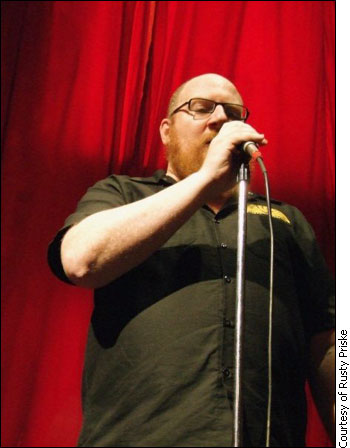
Rusty Priske steps onto the stage. His smiling face is encased by a substantial red beard and set off by a pair of thick, black-framed glasses. His huge boots and ample frame take charge of the small stage. He looks out into the room, and every pair of eyes is staring right back at him.


The audience has filled the Mercury Lounge’s small venue to the brim. People sit on chairs, tables, the floor, even other people. Everyone is welcome: young and old, suits and students, old favourites and first-time performers. The raucousness of the crowd falls into a single cry of “Raise it!” as all fists rise to the air and fall, into a dead silence of anticipation.

Rusty Priske
Burly bard: Rusty Priske performs at the Mercury Lounge.

Priske closes his eye, takes a step back from the microphone, and begins.

To many, the scene would announce a rock concert over a poetry reading. But this is the newest addition to Ottawa’s arts landscape: slam poetry.

Ottawa’s thriving slam poetry scene brings in audiences from all walks of life and consistently sells out shows. Each performer’s passion and individuality inspire a following. Crowds seem devoted to their favourite poets, and the art form flourishes by virtue of the sheer diversity of poets that Ottawa has to offer.

A slam is one part poetry reading, one part competition. But the host is always quick to remind the performers that “the points aren’t the point; the poetry is the point.”

There is room for 12 slam performers to sign up; each has three minutes to perform a poem. Five random audience members are chosen to be judges, and their scoring determines the evening’s winners. The five poets with the highest scores then move on to the next round. Those five poets then each perform again, and the judges determine the winner of the night.

The nightly winners’ scores are recorded, and at the end of the season the poets who had the five highest scores make up the team that represents Ottawa in the national slam competition at the Canadian Festival of Spoken Word. Last year, Ottawa took first place out of 11 teams from across Canada.

And Ottawa said… Let there be slam

Ottawa’s first show dedicated entirely to slam poetry was Capital Slam, which premiered in October 2004. Local poets Elissa Molino and Greg Frankson (who goes by the pen name Ritallin) started Capital Slam. It is now one of Canada’s longest-running poetry slam series.

Frankson says he began performing spoken word poetry in 2003 as a natural step from writing hip hop. “All music is, is poetry to a beat,” says Frankson. He says he was frustrated at having only one venue, The Gold Star Lounge at the African Palace, which would occasionally host poetry slams.

“We thought we could do a pure slam, and that would provide a place for people to practise and to get better,” says Frankson.

Frankson says the first few slams had fairly small crowds, but by the end of the first season they were selling out shows. What started as a monthly show now runs every two weeks because of slam’s popularity with both performers and audiences. Now, along with the Mercury Lounge, Umi Café also has an ongoing slam poetry series, and Avant-Garde Bar and Café Nostalgica have also hosted poetry slams.

‘Raise it!’ the crowd shouts. All fists rise and fall, into a dead silence of anticipation.

Local poet Rusty Priske is the slam master for this season of the Capital Slams. He organizes the slams, and irons out the fine details of making sure everything runs smoothly. Although he went to his first slam only a couple of years ago, he has already made a name for himself in Ottawa’s poetry scene and was part of Ottawa’s team that won at last year’s national competition.

“Right from the first show, I was hooked,” says Priske. He says he was just blown away by the poets he saw at his first slam: people like Steve Sauvé, John Akpata and Kevin Matthews. He says he was moved by what they were doing, but also saw that that connection with the audience was something he could achieve, too.

“I was just taken by what the possibilities were,” he says. “This is just cool.”

Priske says that the Ottawa scene is unusual because it maintains so many different styles. He says that sometimes he sees cities that get their own style, which is distinct and interesting but may influence the way new poets find their own voices. For example, he says, Montréal has a strong musical strain. But at any given Capital Slam show there is a mix of people — from classical poetry backgrounds and hip hop backgrounds, lyrical romantics and political activists

Frankson agrees. He says that the poets are varied, so they bring in varied audiences: “Young professionals, public servants sitting alongside the goths and the hippies. Everybody comes.” This diversity, Frankson says, is what keeps the scene strong and growing.

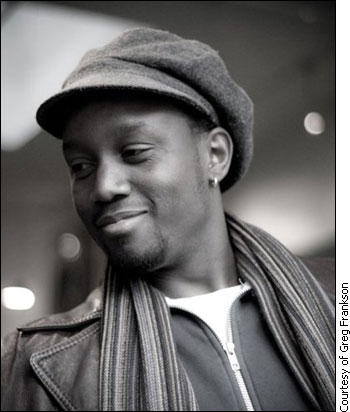
Greg Frankson
Greg “Ritallin” Frankson can stimulate audiences’ brains.

At the Capital Slams, performers seem mostly to fall between ages 25 and 40.  But the show is all ages; the audience consists of everyone, from teens to people who probably have teenaged grandchildren.

The long and the short of slam

The history of slam starts with Marc Kelly Smith and the Uptown Poetry Slam at the Green Mill in Chicago in the 1980s. It was all about trying something new, taking performance to the next level, having fun, but most of all was about opening up poetry to everyone. Smith says that at the time in Chicago, average poetry shows would draw in 15 people at most, and were “staid, formal, and really quite boring.”

Smith says, “The show’s always been a place where you can push the boundaries of what poetry was meant to be.” The stage of the Green Mill has been graced with everything from classical forms of poetry to group sketches to a 78-year-old woman reciting poetry while performing yoga exercises.

The name “slam poetry” came from Smith watching a Chicago Cubs game. The phrase “grand slam” kept coming up, which brought “slam dancing” to mind and all the energy and power that those ideas contain. He says he was also unsure about whether or not the shows would be a success, so he also liked the idea of calling them slams because “it could be a grand slam, or it could be that we’ll slam the door in your face.”

Since Smith’s first show, in 1984, slam has spread across North America and through Europe as well. Smith says that time and again, he sees people come to one of his slams and then go home and start their own shows that become immensely popular.

But a boys’ club?

Although there is always a level of diversity in the scene, Priske points to the lack of female poets coming to perform at the Ottawa slams. There are usually only one or two female participants per show of 12 performers or more.

Danielle K.L. Gregoire has been a poet in Ottawa for years and one of the first slam masters of Capital Slam. She now lives in Lanark County and organizes the Lanark County Live Poets Society (LiPS). She says there used to be more female performers in Ottawa, but recent seasons have seen fewer and fewer.

“It seems like a self-fulfilling prophecy,” says Gregoire. “The less we see ourselves represented on stage, the less likely women are to get up there.”

‘Young professionals, public servants sitting alongside the goths and hippies. Everybody comes.’ — poet Greg Frankson

Josie Frank just started performing slam poetry this year and says that although she has felt comfortable and safe entering the scene, there have been very few female role models. She says that this could be a result of the type of confessional poetry many women write.

“In my experience, the political poetry tends to receive higher scores, and not many female poets perform political pieces,” says Frank.

This male predominance notwithstanding, Ottawa’s slam poetry scene has grown exponentially.  Five years ago, local poets only had one monthly chance to perform; now there are usually eight or nine monthly opportunities to perform at different shows in the Ottawa area.  Poets from the original slams now run their own shows across town, and the inspiration from the old poets drives an influx of new poets.

“Our poets continue to flourish because of all those opportunities to practise and get better,” says Frankson.


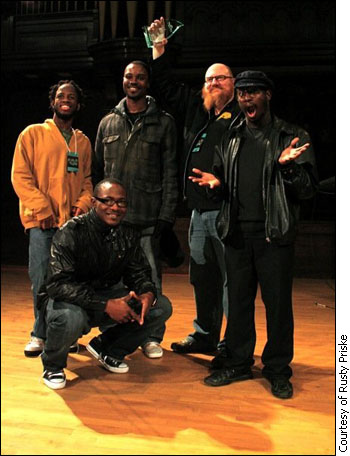
Ottawa’s national slam team (from left: Brandon Wint, Komi Olafimihan, Ikenna Onyegbula, Rusty Priske, Ian Keteku).

A cycle of poetic inspiration

Apart from a Facebook group, the Capital Slam does no promotion. The shows sell out time after time from word of mouth. Priske says, “People know about it; they want it, and I don’t see an end to that.”

Karl Roth, 21, is a university student and a first-time audience member. He says he heard about slam through a friend and decided to sample a Mercury Lounge show.

“It was a great experience; I’ll definitely go back,” says Roth. Although he probably would never perform himself, he says he really enjoyed the show’s relaxed atmosphere and enjoyed the poetry more than he expected.

Priske says that it comes down to getting new people interested and new poets involved. “Once [somebody] goes to one, they walk away with that one thing that they remember,” he says.

The year 2010 promises to be an even bigger year for spoken word, as Ottawa has been chosen to host The Canadian Festival of Spoken Word. Ottawa’s new team will have to defend their title against competitors from all over the country.

But as Frankson says, “The future is bright.”


Related Links

Capital Slam Website

Marc Kelly Smith’s Website

Greg ‘Ritallin’ Frankson’s Website

Ottawa kayakers fight the current, with a new kind of promotional video

Ottawa kayakers are bringing the rapids to a TV or computer screen near you.

In years past, groups of professional kayakers have combined love of sport with the arts, to produce kayaking documentary films that are meant to attract sponsors and create buzz. With the ever-growing power of the Internet, these films have become key for a kayaking career.

httpv://www.youtube.com/watch?v=ZZ3xYno4HrU

Traditionally, these films have been an hour long and available for sale, either online or at kayaking stores like Paddle Shack. But now, world-champion kayaker Joel Kowalski has broken the mould. His latest film, Stakeout, is just over 17 minutes long and is available for free on the Internet.

“If the hype is as big as we think it is, there are a lot of paddlers out there, and they’ll probably all want to download this movie,” said Kowalski.


Enthusiasts watch Stakeout at its Ottawa premier, at Bank Street’s Corner Bar and Grill.

Stakeout features nine kayakers, including Kowalski, riding some of the world’s tallest river waves, in Quebec. These waves and well-known kayakers gained the film a lot of attention, said Kowalski.

The film premiered internationally to an audience of 400 at a kayaking competition in Switzerland in September 2009.  But the film’s trailer on YouTube has been viewed nearly 16,000 times.

Stakeout proves that short, fast-paced, free films can attract the attention of sponsors and fans.

“Usually you end up skipping to the part you like,” said Ben Marr, who also helped to create the film. “You watch Stakeout and it’s pure, it’s free, and you just watch it and ‘go kayaking,’ and you’re super excited.”

Since Stakeout is a shorter film, Kowalski said he wanted not too many companies as sponsors.  One was Ottawa Kayak School and Tribe, a kayak-themed clothing company.

Stakeout proves that short, fast-paced, free films can attract attention of sponsors and fans.

To sponsor a film or a kayaker means that the company provides gear and helps finance the film, or paddler, explained Tyler Lawlor, who co-owns Level Six, a kayaking gear and apparel company. In return, the sponsor’s gear, replete with the company logo, gets exposure every time someone watches the film.

Typically, kayakers approach the sponsor with a proposal for their help. However, Marr and Kowalski said that Stakeout‘s popularity has brought would-be sponsors to them, to inquire about their next project. “They see it’s free and they want to be a part of that,” said Marr. “Especially because it’s brand new, no one’s done this before. Sponsors want to be a part of it.”


An equipment raffle enlivened Stakeout‘s Ottawa premier.

Let’s make a movie

The filmmaking is no easy process. Stakeout took over two years to make. Of that time, Kowalski said, only four months was dedicated to filming.

The average kayaking movie costs between $10,000 to $15,000 to create. The costs come from cameras, computer software and travel expenses, said Kowalski.

“The hard thing about kayaking is it’s not that big a sport, so you don’t get sent cameras and videographers,” said Marr. “If you were, they might not be able to get down the same rivers.”

The kayakers need to be knowledgeable in every aspect of filmmaking, said Marr. This poses a learning curve for most kayakers, reasonably enough. 

Stakeout is not Marr’s only film this year. Marr also had a segment in Valley High, a kayak movie that premiered in Ottawa last November.

Valley High, co-produced by Tyler Fox and Blake Mahoney, is a 40-minute kayak film featuring rivers from all over the globe. It was the first time either kayaker had made a film.

“We learned as we went,” said Mahoney. “There were some pretty painful processes and some pretty hard times, but we managed to get through it.”

httpv://www.youtube.com/watch?v=lg0gR95iLiU

Valley High sells for about $30 online and in kayaking stores, said Mahoney. The films don’t generate any profit from movie sales. The sales income simply helps cover production costs, such as travel and printing DVDs, said Mahoney. As of November 2009, Fox said they had sold about 300 copies of Valley High.

Getting the right exposure

Kayakers aren’t into filmmaking for the money. They create movies to get exposure for themselves and their sponsors.

Once the films are finished, the kayakers involved send their footage to current and new sponsors. If the companies like what they see, they send the athlete gear, and occasionally the money, to enable future exploits and filmmaking.

Kayakers sending their videos to sponsors is a new trend, which has emerged in the last two years, said Lawlor. He said the footage is used on the company’s website to promote their gear.

“Videos are good; videos are fun,” said Lawlor. “It brings the kayaker to the community.”

Another way for kayakers to gain exposure is to enter their films at extreme-sport film festivals.

httpv://www.youtube.com/watch?v=WVPsqk_Nqf8&feature=related

Meagan Stewart works with the Banff Mountain Film Festival. She coordinates two tours call Radical Reels and the Banff Mountain Film Festival World Tour. She said these festivals take the best sport films submitted and play them for audiences around the world. The tour helps filmmakers, because it increases their exposure and connects them with commercial opportunities, said Stewart. She looks for films that are shorter, and she shortens longer films, because shorter ones succeed better.

With the Internet and YouTube now essential as film venues, more kayakers are bound to follow Kowalski’s lead, making videos that are shorter, faster, and, most importantly, free.

“I was inspired by the movies I had seen,” said Kowalski. “I hope people who watch my films get the same feeling I did when I was watching kayaking movies growing up.”

Related Links

Stakeout movie

Bottoms up kayaking

Banff Mountain Film Festival

Canadian women’s roller derby revival

Ottawa resident Natalie Campbell is far from your typical female amateur athlete. Under her alias, Drunky Brewster — a combination of her childhood nickname and adult habits — she does it all, routinely hitting, blocking and falling, all while sporting a cleavage-baring top.

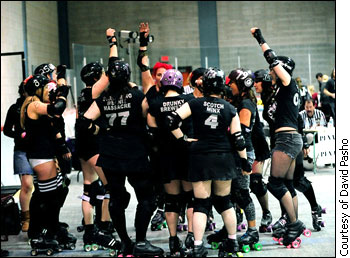
Campbell plays for the Ottawa-area Slaughter Daughters in one of Canada’s fastest-growing, full-contact women’s skating sports. And no, it’s not hockey. It’s roller derby.


The Slaughter Daughters psych up for a bout at Montreal’s Beast of the East Tournament.

This rough lifestyle has come at a price to Campbell, who has sometimes suffered from track rash: a diamond-patterned irritation caused by falling onto the asphalt when wearing fishnets.

Due to other injuries, Campbell (who works as a graphic designer by day) hasn’t had feeling in her left buttocks for over a year. “My skates came out from under me and I ended up having a black bruise that took up my entire butt cheek for three months.” And compared to other girls in her league, the Rideau Valley Roller Girls, she’s one of the lucky ones.

Catching a wave

Once widely popular with TV audiences and amateur contestants of both genders, roller derby saw its appeal plummet in the late 1970s but has recently undergone a resurgence at an independent, grassroots level. Since 2003, roller derby has grown exponentially in North America. In five years, the Women’s Flat Track Derby Association (WFTDA) has gone from seven teams to 79 leagues across North America. Canada alone boasts about 23 leagues.

This new roller derby has garnered great attention; over 2000 fans attended the WFTDA’s regional and national championships. In the Ottawa region, the Rideau Valley Roller Girls’ bouts often sell out, sometimes with upwards of 800 fans.

For an amateur sport in Canada, roller derby has managed to attract huge crowds and increasing numbers of women wanting to try the sport. The question is why? Or at least why now?

Carolyn Storms, a sociologist at the State University of New York at Buffalo, thinks roller derby’s resurgence could be part of a larger trend toward violent sports, such for example the popular mixed martial arts competition Ultimate Fighting Championship.

Derby’s aggressive nature has certainly contributed to its rising popularity; however, many girls also say they have gotten involved with the skating sport because of its pro-female attitudes, its opportunities for roller skating and its novelty.

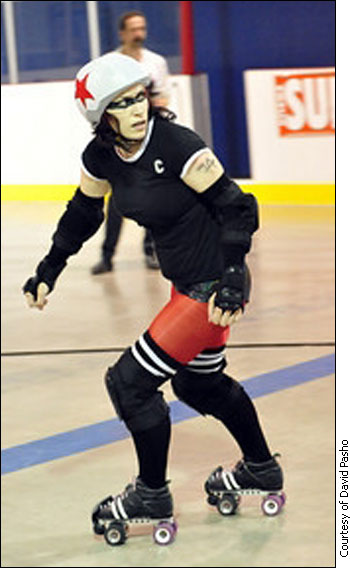
Modern roller derby is played on a flat track, which means teams can use any flat surface like a gym or parking lot. Each team sends out five players who skate in a pack during two-minute periods called “jams.” Points are scored when one player for each team, entitled “the jammer,” laps the pack while the other four players attempt to block the other team’s jammer from passing.


About to pounce: The Slaughter Daughters’ jammer prepares to lap the pack.

For women only

Montreal Roller Derby was one of the first leagues formed in Canada, in 2006. Montreal derby girl Cheryl Gladu (professional name: Ewan Wotarmy, or “You and what army?”) says that because the resurgent sport is predominantly female, it appeals to women who are tired of being undervalued in male-dominated institutions.

“Women are always the sideshow, just playing watered-down versions of male sports,” she says. “This is all about women playing a sport for women.”

Female bonding is a huge draw to the sport. Derby girls often are very close, on and off the track.

“The sense of the camaraderie in the league is unreal,” Gladu says. “I have a strong attachment to the women in a way I’ve never had in another sport.”

Derby girls aren’t in it only to socialize; they’re there also for love of roller skating and performance.

Kelly McAlear (Honey Bee), founder of the Ottawa Roller Derby league, sought to bring the sport to Ottawa after it had caught on in Montreal. She travelled every Tuesday to learn the ropes from the Montreal girls, and bought used skates to start her own league. She says she worked hard to revive the sport because she had loved roller skating as a kid and was always curious about derby.

Nancy Finley, a sociologist who has studied derby for over two years, agrees that roller skates are appealing to women.

“A lot of women feel really empowered skating. I see a lot of women who say, ‘I haven’t done this since I was a kid. I was always proud of myself when I was on skates,’” she observes.

‘A lot of women feel really empowered skating.’ — sociologist Nancy Finley

This is especially true for Canadian women, who have grown up with the ice traditions of hockey and recreational skating.

Gladu, a former hockey player, says although Canadian girls picked up derby later than Americans, they are catching up quickly because foundations in ice skating are transferable to roller skates.

She switched from hockey to derby after attending Montreal’s championship bout in 2008. “It was the biggest spectacle I’d ever seen for women’s amateur sport. You have hundreds of people cheering you on.”

A crowd-pleasing spectacle

The fans of roller derby in Canada are dedicated and growing. Montreal’s games are consistently sold out, and promoters have even began to sell Montreal derby merchandise like t-shirts, pins and beer cozies.

Finley says derby attracts more fans than your average amateur softball game because of the “talking dog syndrome”: people want to come see something unusual.

And with sassy derby names, skimpy costumes and bad-girl attitudes, derby really is like no other amateur sport.

Blackout Susan, Sister Disaster, Screaming Meanie Massacre and Scotch Minx: derby girl names can range from sexy to vicious but must be original. No two girls can have the same name.

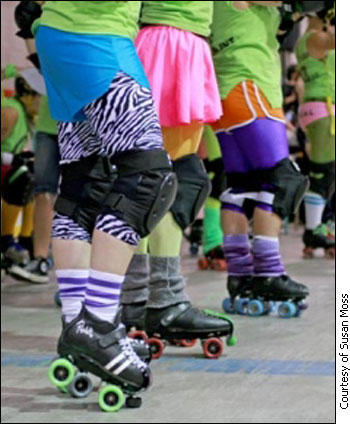
Outfit choices also range from a sexy spectacle to simple and athletic. However, whether a girl comes out in fishnets or work-out shorts, she must cover herself up with protective padding; wrist guards, elbow pads, knee pads and helmets are a must.


Neon duds worn by Montreal’s New Skids on the Block take sports gear to a new level.

Gabriell Garcia (Chica Loca), the marketing chair for the WFTDA, says adornments like the names and costumes have contributed to derby’s rapid growth.

“It’s a full-contact sport where women are being aggressive but being feminine and staying true to their femininity.  So it’s a really exciting show as well as sport,” she says.

Not for faint hearts

But roller derby encounters debate because of its aggressive nature.

Campbell admits the risk for injury is high. “Recently we played a game, and our biggest hitter broke her ankle, like it shattered,” she says. “Collar bone breaks are also common. Everybody’s always bruised up.”

However, Campbell says she risks injury because the physicality is what attracted her to roller derby. “It’s a sport where you’re encouraged to be more aggressive, and I feel like a lot of women aren’t often encouraged to be competitive and vicious.”

Some women feel the sport doesn’t need to be aggressive to be fun. McAlear has recently reformatted her league, Ottawa Roller Derby, to cut out hitting.

“Over the last three years I’ve seen a lot of bad stuff, and being at the hospital isn’t fun,” she says. “You need to respect those who don’t want to be hit. They should be able to have fun and be on skates too.”

It seems there is a market for the low-impact derby envisioned by McAlear. Her several open houses to pitch the idea have consistently brought crowded attendance and a waiting list.

Whether contact or non-contact, women’s roller derby has definitely roused a lot of interest in Canada. When asked what the future holds for the sport, Garcia of the WFTDA jokingly answers, “World domination.” But although she thinks it will keep growing, she also thinks modern derby should stay true to its grassroots.

At the team level, Campbell is just happy Ottawa has embraced the sport. Her Rideau Valley Roller Girls league is in the midst of introducing a new team, the Riot Squad; and with more girls in the league, the potential for travel to other cities will increase in the upcoming season.

However, even “if the sport doesn’t get any bigger, I don’t care, because I’m really happy with derby in Ottawa,” Campbell explains. “I’m excited to see what’s going to happen, and I know it’s going to be good.”

Related Links

Rideau Valley Roller Girls

Ottawa Roller Derby

Montreal Roller Derby

WFTDA

Dying for a tan? Teens and tanning in Ottawa

It was just supposed to be the one time. She never imagined she’d get hooked, but soon she needed a fix three, even four times a week.

At 15 (Lindsay Fagan says), she became, like many of her peers, a tanning addict.

“It was one of those feel-good things, and people noticed. I got compliments,” explains Fagan, now 21. “I was definitely a regular tanner. I’d almost say borderline obsessed.”

Fagan is one of many Canadians to have fallen in love with indoor tanning as a teen. In 2006, a survey by the Canadian Cancer Society found 27 per cent of females age 16 to 24 used tanning equipment, compared to 15 per cent of those age 25 to 44.


Beauty and the beast: at an Ottawa tanning salon.

Now a Carleton University student and a more moderate tanner, Fagan admits that, back in high school, fitting in was a huge motivation for constant visits to the salon.

“Everyone was doing it. They were all getting really nice tans, and it was really attractive,” she explains. “I remember thinking, ‘Oh my God, like I really want to do it.’”

Risky business

Fagan says she tanned excessively, spending hundreds of dollars, not an easy feat for a teenager earning minimum wage.

Did she ever worry about the risks?

“Not at all,” she says. “It didn’t even cross my mind. I didn’t care. It was all about in the moment.”

Darcy MacLennan, owner of a popular Ottawa tanning salon, says she sees many teens hoping to achieve the look they admire on celebrities and their peers without being aware of the risks.

“Some teens, when they’re 15, don’t make the best judgment calls when it comes to their bodies and themselves,” she observes.

The risks are proven, but today’s teens seem willing to take their chances in order to achieve that perfect golden glow.

‘It’s like drinking. People are going to find a way to do it whether it’s against the law or not’ — Lindsay Fagan

According to the Canadian Dermatology Association, Canadians born in the 1990s are two-to-three times more likely to get skin cancer in their lifetime, compared with those born in the 1960s.

This summer, the World Health Organization labeled tanning beds as a definite cause of cancer in humans, upgraded to the same risk-level as tobacco and mustard gas.

The younger you are when you first tan or burn, the greater the risk. According to the report, tanners are 75 per cent more likely to develop skin cancer later in life if they start before age 30.

Despite such risks, MacLennan says tanning in a salon is the safest route for determined teen tanners.

“Kids, if they can’t tan indoors before the summer or before going on a trip, they go out in the sun and put on their baby oil and then they give themselves first, second, third degree burns,” she says.


Tanning lotion and protective eyewear are two safety measures many tanning salons mandate for their clients.

She says that salons with proper standards offer a safer, supervised tanning experience to those teens determined to tan, no matter what.

Legislating safety?

Parents play a key role in determining the fate of teen tanners. Fifteen is the minimum age for tanning in MacLennan’s salon, and parents must sign a waiver, giving them the final say.

But some feel that stronger measures are needed to advocate for the health and safety of Ottawa’s teenagers. In July 2009, following the Canadian Dermatology Association’s report about the risks of teen tanning, one city councillor proposed making it illegal for tanning salons to serve clients below age 18.

Alex Cullen, Bay Ward councillor, says while education is important, legislation is needed to regulate an activity that can have far-reaching consequences.

“We do want to use education. It informs people. But it’s not just a question of ‘Well, ok, I’m informed now, so I’m going to take an informed risk.’ We’re not only dealing with an impact of people’s health, but the cost to us as taxpayers dealing with those symptoms,” he explains. “It’s in the public interest to eliminate these very preventable risks to a very common form of cancer.”

In October, city council decided to scrap the ban, passing off the decision to the province, where similar legislation is under consideration. Cullen says he is disappointed by the decision but hopes there is room for change in the future.

Where there’s a will…

MacLennan says she feels that a ban would not deter teen tanners because it wouldn’t deal with the root cause. Teenagers will still crave the sun-kissed look and may turn to extreme, unsupervised tanning practices to get it.


Inviting though it seems, harsh tropical sunshine can often cause burns for unsupervised tanners, on vacation.

Citing her own experience, Fagan agrees that teens determined to tan would not be put off by a city-wide ban.

“I think it’s like drinking. People are going to find a way to do it whether it’s against the law or not,” she says. “We crossed the border to Hull when we were too young to drink here. There are places in Quebec that have tanning salons, too.”

She says that teens are motivated because tanning makes you feel good and is a convenient way to boost self-esteem and be “cool.”

“It’s a quick fix. You can’t go out and get liposuction, but you know you can go tanning and get that nice tanned look and feel better about yourself.”


Related links

The Canadian Cancer Society’s position on youth and artificial tanning

The World Health Organization’s 2009 Report


Not Karsh’s Ottawa anymore: professional photographers face challenges in the capital


Paul Couvrette in his studio in downtown Ottawa.

For 35 years, Paul Couvrette has worked as an Ottawa-based photographer.

He has photographed every prime minister from Trudeau to Harper; his work has appeared on the covers of publications such as Time, Maclean’s and Ottawa Life. Yet today his traditional work-fare of weddings and family portraits provides just a quarter of his income, and Couvrette thanks government and corporate contracts for keeping him comfortable in an unsteady job market.

Professional photography has changed drastically recently, especially in Ottawa. Digital cameras and cell phones jammed with megapixels are replacing photographers everywhere, and young people trying to break into Ottawa’s scene are discovering they need more than just an artistic eye in order to succeed.

Couvrette says the average business life of a photographer in Ottawa has declined to a mere three or four years; having been a member of the Professional Photographers of Canada for over 20 years, Couvrette has seen countless photographers pass through the organization’s monthly meetings.  He admits that some amateut photgraphers have talent, but suggests they lack the dependability, experience and service outlook that established studios offer clients.

Like Couvrette, Dylan Blanchard and Stephen Harris understand that the capital isn’t the easiest place to establish a photography career. Blanchard, 21, and Harris, 26, are business partners in Studio 28 here.

“Ottawa’s not bad for getting a start, but having, say, a fashion career here is very hard. If you can get into the government, national corporations or non-profit organizations, then you’re laughing, so to speak,” Blanchard explains. “You can’t have more than what’s actually in Ottawa, that’s for sure.”

Less work to go around

According to Couvrette, the local marketplace has shrunk noticeably in the last three years. For example, weddings, once considered a guaranteed source of photographers’ income, are becoming unreliable.

“Weddings used to be profitable. They were the bread and butter of my business for many years. These days, unfortunately, if they even hire one, people have decided they simply want photographers to shoot the digital files, and let them make their own albums on Facebook, or I don’t know what,” says Couvrette.

He explains that his studio makes the same amount of money from weddings as it did three years ago, but he has to shoot 30 per cent more events to compensate for clients lost to the digital world. The studio’s clients spend anywhere between $500 and $15,000 on their wedding photos. For other income, Couvrette has come to rely on corporate and government clients – for example, in his current project, shooting recycling plants for Waste Management Canada’s annual report.

Futhermore, the digital wave that’s putting a rainbow of miniature cameras on the shelves is giving consumers the impression that they too can be “real” photographers. Many fail to see the point in hiring a professional at all.

Even weddings, once considered a guaranteed source of photographers’ income, are becoming unreliable.

Still, there seems still to be a niche for young and inexpensive photographers to try their luck here. Ottawa Start, an online business hub that provides links to local photographers, lists over 200 active photographers in the city.

Amna Hakim, whose website is one of the many located on the Ottawa Start page, had a full-time job with a financial software company when she started taking pictures as a hobby. A friend throwing a low-budget event asked Hakim if she would be the photographer, since she was attending anyway. It was a success, so Hakim decided to put together a website and start promoting herself as a professional photographer.

“From there it got bigger and I’ve spent no money on marketing or advertising. I had a really strong network of people,” she says. “Word of mouth is very powerful.”

Hakim suddenly found herself with two full-time careers and knew which one to keep.

“I did what felt right and decided to pursue my dreams of becoming a photographer. It allows me to express myself as an individual.”


Today, Couvrette has to shoot 30 per cent more weddings than before, to compensate for other business lost.

Hakim focuses the majority of her professional work on what her website refers to as “international wedding and lifestyle portrait” photography. On average each year, she shoots around 50 weddings and just short of 200 portraits. Hakim’s wedding packages start at $2500, though she suggests that her clients often spend up to $6000 on their events.

Hakim says her previous work trained her to pay attention to details and numbers.  But not everyone has a business background. Couvrette suggests that many young photographers either don’t know their commerce basics, or simply aren’t involved enough in operating their business beyond the artistic aspects. He believes that the ease and availability of the digital frontier may be attracting young people who lack the needed business savvy.

“Many people come out of colleges with really big dreams, and unfortunately a few years of photography classes can’t teach you how to make it in this industry,” he argues. “Colleges don’t spend nearly enough time on business training.”

Business sense: mandatory

Claire Dodge, 19, is in her last semester of photography at Algonquin College in Ottawa. She says though the program does focus heavily on the technical skills of photography, the degree offers courses in communications, business studies and entrepreneurship.

“A lot of the time things just come up in other classes naturally. There isn’t always specific class time dedicated to the business-related aspects of being a photographer,” says Dodge.

Algonquin’s website describes the entrepreneurship course as designed specifically for students who wish to be self-employed. Its topics include quoting projects, hiring professional models and dealing with copyright issues and small claims court.


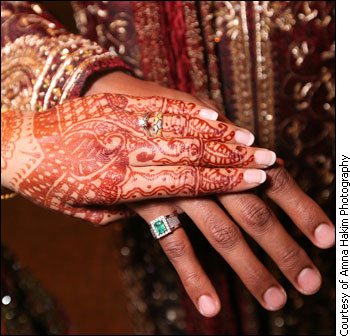
Typical of Hakim’s work: a bride’s hand covered in henna at a traditional Indian wedding.

Still, learning through experience may have its own benefits. Since moving here from Prince Edward Island, Blanchard and Harris have discovered how to capitalize on living in Ottawa. They are currently producing a calendar to support Candlelighters, a nonprofit organization that supports children with cancer and their families.

“[The calendar] is all local, and that’s very important to us. The photographers, the promoters, the models and the fashion designers are all from Ottawa. Plus, it’s for a great cause that has strong ties in this city,” says Blanchard.

But even if young photographers are sufficiently business-aware, what lies ahead for the industry? Will it be possible to survive as a professional if your clients have access to the same high-quality equipment that you do?

“It’s about reputation. I shot a wedding 25 years ago, and just last week I photographed her daughter’s wedding as well,” says Couvrette. “Service and dependability are not normally words you associate with photography, but this is a business like anything else. You want to trust your planner or your jeweller on your special day, and your photographer is no different.

“I’m just waiting for the next wave,” he adds. “The latest one is deadly but things change, people change, society changes. I think people will go back to creating actual wedding albums once the Facebook fad or whatever washes away. Like the old saying goes, ‘Whatever is old, is new.’”

The risky art of graffiti

Some art just will just never be appreciated.

This is what an Ottawa graffiti artist who goes by the name of Bobar says is the real problem with graffiti in the city. At 22 years old, Bobar often spends his days painting beautiful murals on the sides of the usually grey walls of the city. He normally does it without the permission of whoever owns the property.

Two blue fantasy faces smile beneath a bridge.

Bobar explains that the majority of the “art” people see out there is not the good kind of graffiti. Bored teenagers or adults will make crude remarks or spray their artist name on a public wall or park bench. This is not the same as what he does.

“There’s a difference between vandalism and graffiti,” says Bobar.

His graffiti will catch your eye immediately. The swirls of unexpected colours blending together on the side of a wall often form designs within other designs. He will contrast colours, paint with perspective, use optical illusions — anything to make people look twice.

One of his murals will simply look like a car from a distance, but up close there is a cityscape within the car. Get even closer and you might notice that the buildings in the cityscape are actually stereo speakers.

When he paints, Bobar says he chooses his location carefully. The busier the place, the harder it will be to actually paint there, but the more rewarding the completion. Since he does his work quietly and without permission, location is key.

“I try to choose places that people see every day, but they don’t really see,” says Bobar. “People will stop and stare at a wall they’ve passed a hundred times before, because of us.”

An homage to Ray Charles in a Gatineau park.

Ephemeral art

“It is sort of strange. Knowing that I’m doing all this sort of work, and I know this won’t last forever,” says Bobar. “If I’m lucky, maybe it will still be here a year from now.”

According to Bobar, graffiti art differentiates itself from other media because it is in a public place for everyone to see. Bobar’s graffiti art is just as expressive and beautiful as the work he does in his home, and he says that he appreciates using a larger canvas that is visible to more people.

“How is it any different if the Mona Lisa was painted on the side of a bridge instead of a canvas?” Bobar asks. “With graffiti you have a guaranteed audience. A lot of them will probably hate it, but not all of them.”

For larger murals, Bobar will usually work with other graffiti artists he has met over the years. These collaboration pieces are often some of his most impressive, because each artist will bring his or her own style and unique skills into the art. One of Bobar’s longtime friends, an artist who goes by the name Dizzer, says that when they do collaborations, spectators often think the worst.

‘How is it any different if the Mona Lisa was painted on the side of a bridge instead of a canvas?’ —graffiti artist Bobar

“People probably think we’re all in a gang or something when they see us,” Dizzer says. “But none of us are drop-outs, and none of us are living on the streets.”

Bobar currently studies art in college, and is gifted not just in graffiti. He does everything, from sketching to oil painting and even computer-generated 3D art. He has sold some of his work for hundreds of dollars.

Some like it, some hate it

Local residents are divided on the issue.

“It doesn’t bother me,” says Chris Lawrence, 22, an Ottawa citizen who has never met a graffiti artist before. “I’m not sure if I would call it art, but this stuff seems better than the rest. I like the way it looks, sure. I’m just not sure whoever owns this building feels the same way.”

Other residents like Sylvia Harb, 28, say the graffiti makes the neighbourhood seem run-down, no matter how good the artwork. “It doesn’t really matter if it’s beautiful or not. They make this whole area seem trashy,” says Harb.

The City of Ottawa has a very strict policy on graffiti, designating it as illegal. Christine Hartig, the policy officer for the graffiti bylaw in Ottawa, says that no matter the circumstance, graffiti is unacceptable. If people are caught spraying illegally, they can be fined up to $610.

A graffiti-fantasy portal: towers of the sky and sea.

The city has designated specific walls and bridges as legal graffiti zones for anyone to spray on, but Bobar says these walls are not enough for all the graffiti artists in the city.

“The way I see it, I mean, it’s not like we’re hurting anyone. All we’re doing is bringing life into something plain,” says Bobar.

Related Links

Ottawa Graffiti Flickr Album

City of Ottawa – Graffiti Management Program

How To Report Graffiti

Love’s second chance at Missed Connections

It’s a cool fall afternoon. Walking home from work, you cut through the park to enjoy its beautiful foliage. As you approach the steps, you see him. Hair dark as night, eyes as bold and blue as the ocean and a smile so inviting you almost blurt out your phone number. Instead, like an evanescent flash of sunset, the moment passes.

Yet, however fleeting, it stays with you. Replaying each second over and over in your mind, you yield to an unidentified infatuation. The more time that passes, the more you dwell on the thought of him. The question becomes: is there anything you can do?

Thanks to Craigslist, now there is.

The website has a category known as Missed Connections. It’s a forum where people can anonymously post comments about someone special they encountered in their day. Rather than letting that potential love slip away, people now have the tools for a second grasp.

“People love to have something they can do in that situation rather than be powerless,” Jim Buckmaster told the Times Colonist in Victoria. Along with representing Craigslist, Buckmaster is the man behind this new forum.

It became a feature to the website in 2000. Buckmaster says he added the category after noticing people were using the Craigslist personal ads to reconnect with someone they shared a fleeting moment with.

With 100 topical discussion forums, Craigslist receives more than 120 million user postings each year. Since 2000, the Missed Connections section of Craigslist (for all cities) boasts of 6.5 million hits, with an average of 14,000 hits a month.

It became an instant hit, says Buckmaster.

Capital connections

Urban areas have become the hub for these connections to flourish. In Canada, bigger cities like Montreal, Toronto and Vancouver usually see up to one hundred comments per day. Ottawa usually receives fewer than twenty.

Nonetheless, people are trying to connect.

Nicole Mather, 23, is a former Ottawa resident and a Craigslist enthusiast. She recalls an exchange she shared with a stranger on the bus.

“When we kept smiling at each other I had a feeling something was there,” she says. “When I checked Missed Connections the next day, I found his post, which said how he loved my cute smile. He said he wished he got off at the same stop as me.” 

Included with the post was an anonymous email address, for reader replies. Mather replied, which she says led to weeks of dating. Even though it didn’t work out, she says it was worthwhile.

“I still think it was fun to just go for it,” she says.

The Missed Connections bulletin board is filled with stories like Mather’s. These chance encounters occur in all kinds of venues, from bars to bus stops, fitness centers to coffee shops.


Leon Wojciechowski working at Bridgehead Coffeehouse.

Bridgehead Coffeehouse is a busy meeting spot in downtown Ottawa. It’s also one of most frequently mentioned places on the local Missed Connections. Leon Wojciechowski, 25, works at Bridgehead, at the corner of Albert and Bank. He says there’s a history of comments about Bridgehead employees, recalling one about all the “cute boys” working behind the counter.

“This one girl wrote that coming in for coffee was the highlight of her day,” he says. “It’s really sweet because you know it could be anyone. It makes you look at everyone in a better light.”

Many posts are charming tales of a time and place. Some are vague, giving little detail about the person posting, with flattering tidbits about the one who caught his or her eye. Most are heartfelt.

“You wore a flowered dress and sat down on the 95 bus,” read one anonymous comment. “When our eyes met, my heart skipped a beat.”

What’s love got to do with it?

This site could be placed on the shelf with many other social networking forums, particularly dating sites, where finding a soulmate is the goal. But Missed Connections has a more distinctive appeal: For one thing, one or another of those posts could be about you. Someone might be trying to meet you. Evidently, many readers are people who might never consider posting a message themselves, yet still check the site on the off chance they’ll see themselves described.

“There’s something very compelling and powerful about being found, as opposed to being the one who’s searching,” says Wendy Paterson, an Ottawa psychotherapist.

Also, she says, Missed Connections differs from regular dating sites in that you are re-connecting with someone you’ve already noticed, rather than trying to connect for the first time.

“There’s so much communicated in a glance that could never happen in an email exchange,” she says. “It’s bringing back the idea of meeting by chance.”

Dan Trottier is a psychology professor who teaches a social media class at Queens University in Kingston. He says Missed Connections differs from other social sites because it exposes something real about a person.

“There’s a sense in which people are a lot more frank and forthcoming with their emotions,” he says. “On sites like Facebook and Lavalife, there is usually a sense of strategy or deliberately creating a persona in a profile for others to see.”

Trottier says that other dating sites put more pressure on people to illuminate all their positive features, which can be dishonest or misleading. But on Missed Connections, people are seeking those they’ve already witnessed in their everyday life.

He also says the anonymity of Missed Connections gives people a sense of freedom.

“It gives people the chance to put their emotions out there without any sort of reprimand,” he says.

The website tends to attract people aged 18 to 35. Many posts are written by men, seeking women who have caught their eye.


Bridgehead Coffeehouse, where connections are made.

“There is still the expectation that men are pursuers who start the relationship,” says Dr. Gary Lewandowski, a psychology professor at Monmouth University in New Jersey. Lewandowski says men are more romantic and more prone to experiencing love at first sight, while women tend to take a more practical approach.

Ottawa Craigslist fan Chris Cleroux, 26, is an example. He says he thinks Missed Connections is more romantic than regular dating sites because it leaves love to chance.

“I think if someone sees a message and seeks out that connection, it’s much more real than paying Lavalife $60 to find your soulmate for you,” says Cleroux.

Cleroux says he checks Missed Connections every couple days, in hopes of finding comments from women he’s encountered. While he’s posted comments before, Cleroux admits he’s never had replies. But this isn’t discouraging.

“I don’t believe in love at first sight, but I think you can be blown away by someone enough to know that it’s worth looking for,” he says.

Real-life drama

Not everyone who signs onto Craigslist is looking for a soulmate. Rather, some just enjoy the daily dose of nonfiction entertainment.

“We’re all still suckers for romance and the idea that true love can find a way,” Lewandowski says of this third-person involvement. “Every time you read a comment, in your mind you assume it’s going to work out for those people.”

He says the idea of love developing from brief occurrences is somewhat of a romanticized notion. Nonetheless, he says, this is one aspect that attracts people to Missed Connections.

“I still think it was fun to just go for it.” — Nicole Mather, who replied on Missed Connections

Mather says she can relate.

“I started out just checking it to see if I saw comments about my friends,” she says. “But I really think it could work out, which is why I continue to read it.”

Lewandowski says it has all the hope and possibility without the downside, which is the risk of rejection that people face on regular dating sites. With its element of anonymity, Missed Connections eliminates that, he says.

“You’re giving yourself an excuse,” says Lewandowski. “You want to give it a try by posting something, but if nothing comes from it you don’t have to think it’s because you’re unattractive. Rather, you can just assume they don’t read Craigslist.”

Paterson agrees that this allows people to protect their feelings. However, she also says this is the emerging characteristic of a society growing too comfortable with technology, where people are too far apart from one another.

“People don’t know how to introduce themselves anymore,” she says. “We don’t live in a culture where we have permission to walk up and say hello to someone that catches our eye.”

But Lewandowski says this has to do with the busy life of the modern city-dweller. “You don’t always have time to strike up conversation right at the moment someone passes you by.”


Bayview bus stop, where waiting can become a moment with a stranger.

A long shot at love

Despite all hope and possibility, happy endings are not a guarantee. Are people actually connecting lifelong via Missed Connections?

“It’s hard to tell,” Craigslist.org founder Craig Newmark told MSNBC. “The anonymity involved in posting makes it difficult to keep track of success stories.”

Nonetheless, Paterson says she sees a future for Missed Connections in Ottawa.

“It’s need driven,” she says. “As long as people have this need to feel protected, yet still want this romantic aspect, I can imagine it getting bigger.”

But Trottier says that if the site enlarges, that might change what it means for people.

“One of the allures of Craigslist is that it has that underground feel,” he says. “If it was made more explicit, I think it would lose its value as a space to confide in.”

In the meantime, self-proclaimed romantics like Cleroux will continue to post on Missed Connections — even if there’s no result.

“It just makes a person’s day,” he says. “If you can just put a smile on someone’s face it’s all worth it.”

Related Links

Ottawa Missed Connections
http://ottawa.en.craigslist.ca/mis/