Nerdlesque: worshipping the geek gods

From the number of video games that Del Roba references in casual conversation, her Xbox gaming console must have provided marathons of dedicated play.

Now, that Xbox is shattered in pieces — smashed by Roba not as a result of a frustrating loss, but because she needed to wear it to her job.

Roba, whose real name is Frankie, is the founder of the Ottawa-based Browncoats Burlesque, a one-year-old burlesque troupe that celebrates fringe-culture enthusiasms in an onstage form of burlesque now burgeoning in North America called “nerdlesque.”  Browncoats Burlesque — a reference to the cult TV show Firefly — features acts with such nerdy themes as cult movies, comic books and video games (hence the costume composed of Xbox hardware).
Browncoats Burlesque
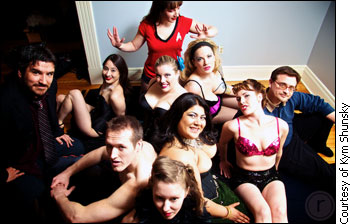
Geek chic. Ottawa’s Browncoats Burlesque troupe features Del Roba, top, and Foxie DeVille, second from left.

Browncoats Burlesque is one of several burlesque troupes across North America to showcase nerdlesque, but this quirky subgenre has grown in popularity only within the past two years.  One early notable troupe of this emergence was formed in 2008 under the name Nerdlesque to be a monthly burlesque series exploring nerd culture.  Since then, most major U.S. cities with a strong burlesque presence showcase nerdlesque acts, such as the Flaming Dames’ nerdlesque-themed show at Chicago’s New Millenium theatre company, or Skill Focus: Burlesque in Orlando, or Whedonesque Burlesque in Seattle.

For Roba, Browncoats Burlesque has been a labour of love.  The self-professed nerd says she had seen the Devil Dolls burlesque troupe in Ottawa and was inspired to create her own burlesque show, based on something she knew best.  And what what she knew best, she says, was nerd culture: video games, cult movies, science fiction series and other interests typically classified as “geeky.”

Conveniently, her first recruits for the show were friends from her live-action role-playing group, or LARP.  (LARP is an activity in which players create settings and characters and improvise scenes in a real-life setting, creating challenges for their characters not unlike storylines in video games.)

Dorks in short shorts

As risqué as burlesque is, the performance art attracts people with a variety of day jobs.  The performers with Browncoats Burlesque include workers for several branches of the government, a chef, and a neuroscience researcher.

A burlesque show can feature various sideshow performances, but the defining acts showcase performers — usually women — removing their clothes.  The main difference between burlesque dancers and other strippers is the tongue-in-cheek humour, which satirizes the sexualization of stripping.

Roba says that, friends and supporters aside, their audiences tend to span a variety of demographics.  She says that nerdlesque has a strong marketplace appeal.

“Nerdlesque is definitely something I think people can get behind. I find people are more able to relate to the performances than with some other styles of burlesque,” she says. “Most people can feel for the awkward nerd just trying to be cool.  Nerdlesque, in many ways, is a form of ‘fan fiction’ amongst the many that make up ‘fanculture’. That equals an army of nerds that could possibly get behind nerdlesque.”

‘My influences are ballet and video games.’ — Foxie DeVille

Aside from group numbers, the members of Browncoats Burlesque write and choreograph their own acts.  Under the wide umbrella of “nerdiness,” the range of ideas seems unlimited.

You’ll find, for example, a fervent Batman fan parading as the villains Poison Ivy and Harley Quinn, and an avid gamer pulled off a complicated ode to the computer game Tetris.  Performers say nerdlesque allows them to express and embrace the niche interests of their personal lives.

Foxie DeVille (who has asked to print her stage name to preserve her privacy) says she already had a background in burlesque before joining the Browncoats Burlesque.  The classically trained dancer lists-off a number of Hollywood influences that attracted her to more complicated choreography, such as a dance using large fans.  Despite her traditional training, she says she feels inspired by creative opportunities with the pop culture references.

“My influences are ballet and video games,” she says, noting the unusual marriage of the two hobbies.

At last Halloween’s show Freeks N Geeks, Roba performed a number based on the cult film Attack of the Killer Tomatoes, which she says she chose based on her passion for critically and commercially unsuccessful movies.  The emcees gave the audience red balls to throw at her during the performance, symbolizing a downpour of tomatoes from the film.  Though at first uncertain whether the audience would participate, she says that she was so impressed with the audience’s gusto in their throws that she cheerfully smiled and thanked the crowd when she was supposed to pretend she was dead.

“Audience interaction is pretty awesome,” says DeVille.  She says that although the audience doesn’t always understand the reference, they engage with the comedy and light-hearted nature of nerdlesque, more than with other burlesque shows.

Enthusiastic audience responses like these have encouraged the spread of nerdlesque troupes and individual acts, which in the United States now range from Seattle to New York City.  Montreal and Toronto feature individual nerdlesque acts, but Browncoats Burlesque is currently the only full-time, nerdlesque-only troupe in Canada.

Revenge of the nerds

NYC Nerdlesque
Software and hardware. New York City’s Nerdlesque boldly goes nude where no nerd has gone before.

Chris Chappell is a co-producer of the New York City–based troupe Nerdlesque, which is a joint venture between Sneaky Snake Productions and Captain Sharky’s Historical Gender Equality Reactualization.

Chappell says he suspects that the rise in nerdlesque groups across North America can be attributed partly to a general cultural shift.

“There’s this really complicated intersection of hipness and nerdiness,” says Chappell.  “There’s a mainstreaming of a lot of these [nerdy] things.”  In other words, “geek is chic”: It currently is trendy to celebrate the otherness of traditional nerd interests, and this new value is reflected onstage.

He says that in North America nerd pride is on the rise. “People have really incorporated that into their idea of culture.  And [nerd appeal in the arts] is happening organically as a result.”

Yet Chappell says there is a danger of not sufficiently honouring the original material from which nerdlesque troupes draw their references, indicating concern about taking away some of the substance of nerdy sources after they’ve hit the mainstream.  Still, he says nerdiness is a “vibrant trend and community,” and his troupe is proud to be a part of that.

For Browncoats Burlesque, whose acts have such personal significance to the performers, honouring the nerdy references is a priority.

Above all, though, the performers insist on one key component.

“Basically, we want everybody to have fun.  That’s all we’re really trying to do,” says Roba.

Even if it means smashing her prized Xbox for the show.

Save the boobs: breast cancer awareness, made cool

Picture a beautiful young woman in a bikini, walking confidently into a pool scene, surrounded by gawking men and women, all staring at her breasts. It may sound like a beer commercial: but not this time. Instead of trying to sell a product, a recent viral video was selling a message — to save the boobs.

The video features Aliya-Jasmine Sovani, host and segment producer of MTV News Canada, with the camera tight on her bouncing breasts. The message appears onscreen: “You know you like them…now it’s time to save the boobs.” The video ends with a statistic, that breast cancer is the leading cause of cancer death in young women, ages 20 to 49.


Attention getting: Aliya-Jasmine Sovani in the hit cancer-awareness viral video Save the Boobs.

Sovani says people like breasts and are used to seeing them in advertising, but there’s a huge disconnect between those breasts and the breasts affected by cancer.

“This video was really just supposed to shock you into realizing that the breasts in breast cancer are the same ones that you appreciate or you look at or you have,” she says.

The Save the Boobs video was a viral hit, spreading quickly across the Internet. Sovani, who came up with the idea and wrote it, says she wanted it to be fun and sexy, something that people would open on their computers and watch. And people certainly did.

The video was viewed online hundreds of thousands of times and was picked up by the news media. In the end, it reached many people who weren’t on the Internet.

“This thing was all over the place,” says Tom Megginson, a creative director at Acart Communications in Ottawa. According to Megginson, viral marketing is about being bold and breaking boundaries, which this video achieved in order to reach young viewers.

The video was a promotional tool to sell tickets to a Toronto breast cancer fundraiser called the Boobyball, which Sovani co-chaired this year. It was sensationally effective, helping to sell out all 1,100 tickets.

The video is an example of the creative tools now being used to direct young people’s attention to the breast cancer cause. The idea is to raise young women’s awareness that breast cancer can affect them, too, says Sovani.

Appealing to a younger crowd

People today in the breast cancer awareness field are trying to appeal to younger audiences through three strategies: viral marketing (whereby a marketing message passes from user to user via Internet and social media), charity events aimed at people in their 20s and 30s and other programs aimed at young women affected by or concerned about breast cancer.

It’s important that young women be aware of breast-health messages, because while most women who get breast cancer are older, 23 per cent of all cases are women under 50.

It is the most common cancer to affect women, says Marisa Weiss, a breast oncologist and breast-health author.

Therefore it’s important that women do all they can to reduce their risk of getting it, says Weiss. If they do get it, it’s important they find out this fact as early as possible, she adds.

Twenty-three per cent of all breast cancer cases are women under 50.

“Young women have the greatest opportunity to prevent breast cancer if they start breast-health practices at a young age,” says Weiss. “So there’s a great opportunity to reduce the devastation of this disease.”

Weiss says this means young women should not smoke and should stick to a healthy weight, limit their alcohol intake, exercise three to four hours a week and avoid hormones in their food.

Also, young women can self-examine their breasts on a regular basis, looking for lumps or other abnormalities, and notify their doctors of any changes, says Weiss. By starting this at a younger age, women will develop a better sense of what’s normal and what’s not.

Partying with a purpose

It’s important that such breast-health messages get through to young women. Hence the need for events like the Boobyball, which get younger people involved and raise consciousness among younger women.

Thanks partly to the attention-grabbing Save the Boobs video, 2009’s Boobyball was a huge success.  The sold-out, cruise-themed event raised $160,000 from ticket sales, an online auction, on-site fundraising, event sponsorship and private donations.


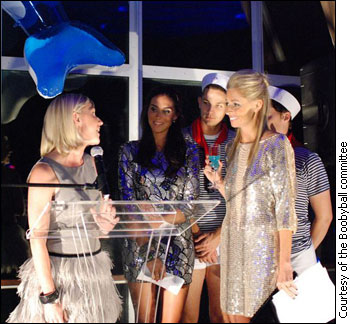
Hosts Ashleigh Dempster and Amanda Blakley at the 2009 Boobyball.

The Boobyball was started in 2002 by a group of young men and women in Toronto, to help raise the spirits of their friend Sarah O’Regan, who was diagnosed with breast cancer at age 23.

Amanda Blakley and Ashleigh Dempster were part of that founding group. In 2006, Blakley and Dempster co-founded a culture club called The Society, which has presented the Boobyball since then.

Dempster says the Boobyball is anything but a stodgy fundraiser.

“It’s wild and fun, and it’s crazy, and there’s no sit-down dinner,” she says. It’s attractive to young people, adds Blakley.

Sovani agrees. “[The Boobyball] is getting a bunch of young people involved by doing what young people do anyways – which is party,” says Sovani. “So it was like partying for breast cancer, and raising money in that way.”

The event raises money for Rethink Breast Cancer, a Toronto-based organization that tries to reach younger women in creative ways, promoting breast-health awareness with a variety of educational and support programs. The organization hosts edgy events and designs materials aimed at a younger demographic.

One of Rethink Breast Cancer’s jobs is to administer a program called the Booby Innovation Grant, to fund new projects spearheaded by breast cancer survivors. The program gives survivors an opportunity to submit proposals for innovative tools they think will help improve life quality for other newly diagnosed women going through treatment. The grant will then fund one or more of these projects.

This B.I.G. is the program to which 60 per cent of the Boobyball’s net funds will go. The rest will go towards Rethink Breast Cancer’s existing programs, research and support services.

M.J. DeCoteau, executive director of Rethink Breast Cancer, helped found it in 2001 upon realizing that breast cancer information wasn’t reaching young women. After her mom died from breast cancer, DeCoteau, then 22, began researching her own risk, but says the information she found wasn’t much designed to motivate someone her age.

DeCoteau says there is a lot of information out there, but it isn’t very inviting to young women because it’s either too medical or intimidating, or it simply has an older face on the brochure, which naturally suggests that cancer is something women don’t have to think about until they are older.

She says Rethink Breast Cancer was an easy concept to sell.

The idea has hit a nerve in Canada. DeCoteau says people have really responded, whether to being shown that breast cancer materials don’t have to be designed for a 65-year-old, or to being invited to events that are fun and upbeat, have cool music and otherwise appeal to young people.

Rethink Breast Cancer’s events have become popular, drawing in hundreds of young women and men. The annual Rethink Breast Cancer Romp in Toronto attracts over 600 people.


Breast cancer survivor Sarah O’Regan, left, speaks at the Boobyball, which was founded in her honour.

DeCoteau says it’s important to reach younger women because, although they belong to a smaller cancer demographic, they too can have lives shaken by the disease.  Many young women are just starting careers or have small children, she says. A breast cancer diagnosis can easily bring severe consequences to the family.

Side effects of treatment can include fertility issues or early menopause, she says. And with young women, these changes would happen at an early life stage.

While other breast cancer organizations agree, they don’t focus exclusively on young women.  For example, the Canadian Breast Cancer Foundation tries to reach everyone, as breast cancer can strike people of any age, says Naomi Rose, director of marketing and communications for the CBCF Ontario region.

But that’s what makes Rethink Breast Cancer different. It has created a way specifically for young people to get involved, DeCoteau says.

Any buzz is good buzz

DeCoteau says that through viral marketing and new media, she hopes to continue reaching more young people where they are, which is online. And the Save the Boobs video proved that. Social media and YouTube brought it to a whole new level, opening it up to an international audience, says DeCoteau.

Meanwhile, the video continues its life online, racking up plenty of views and comment.

httpv://www.youtube.com/watch?v=CQI1tzkwpkI

Megginson says it definitely invites criticism by presenting the overtly sexualized image of breasts, which is sure to offend some viewers.

Meredith Gould, a health communications blogger and sociologist, is one such. She says she found the video stupid and offensive. Also, she says, if they were trying to appeal to a younger demographic, the text should have been edgy and punchy to match the images; but the text was boring and flat.

But despite these criticisms, the video has at least sparked discussion, which Sovani says is a good thing.

“Everyone kind of came to the conclusion that at least it got people talking, which, at the end of the day, is really positive,” she says.

Ottawa poets hit a grand ‘slam’

The stage is set. The lone microphone stands in front of the red velvet curtains, visions of Ottawa’s Byward Market creeping in between the cracks of the drapes. The glittering disco ball hangs high above, its soft, shimmering lights bouncing off the surfaces of the room.

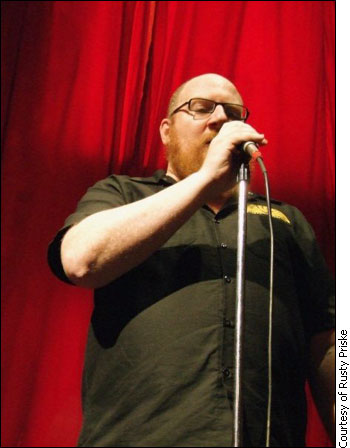
Rusty Priske steps onto the stage. His smiling face is encased by a substantial red beard and set off by a pair of thick, black-framed glasses. His huge boots and ample frame take charge of the small stage. He looks out into the room, and every pair of eyes is staring right back at him.


The audience has filled the Mercury Lounge’s small venue to the brim. People sit on chairs, tables, the floor, even other people. Everyone is welcome: young and old, suits and students, old favourites and first-time performers. The raucousness of the crowd falls into a single cry of “Raise it!” as all fists rise to the air and fall, into a dead silence of anticipation.

Rusty Priske
Burly bard: Rusty Priske performs at the Mercury Lounge.

Priske closes his eye, takes a step back from the microphone, and begins.

To many, the scene would announce a rock concert over a poetry reading. But this is the newest addition to Ottawa’s arts landscape: slam poetry.

Ottawa’s thriving slam poetry scene brings in audiences from all walks of life and consistently sells out shows. Each performer’s passion and individuality inspire a following. Crowds seem devoted to their favourite poets, and the art form flourishes by virtue of the sheer diversity of poets that Ottawa has to offer.

A slam is one part poetry reading, one part competition. But the host is always quick to remind the performers that “the points aren’t the point; the poetry is the point.”

There is room for 12 slam performers to sign up; each has three minutes to perform a poem. Five random audience members are chosen to be judges, and their scoring determines the evening’s winners. The five poets with the highest scores then move on to the next round. Those five poets then each perform again, and the judges determine the winner of the night.

The nightly winners’ scores are recorded, and at the end of the season the poets who had the five highest scores make up the team that represents Ottawa in the national slam competition at the Canadian Festival of Spoken Word. Last year, Ottawa took first place out of 11 teams from across Canada.

And Ottawa said… Let there be slam

Ottawa’s first show dedicated entirely to slam poetry was Capital Slam, which premiered in October 2004. Local poets Elissa Molino and Greg Frankson (who goes by the pen name Ritallin) started Capital Slam. It is now one of Canada’s longest-running poetry slam series.

Frankson says he began performing spoken word poetry in 2003 as a natural step from writing hip hop. “All music is, is poetry to a beat,” says Frankson. He says he was frustrated at having only one venue, The Gold Star Lounge at the African Palace, which would occasionally host poetry slams.

“We thought we could do a pure slam, and that would provide a place for people to practise and to get better,” says Frankson.

Frankson says the first few slams had fairly small crowds, but by the end of the first season they were selling out shows. What started as a monthly show now runs every two weeks because of slam’s popularity with both performers and audiences. Now, along with the Mercury Lounge, Umi Café also has an ongoing slam poetry series, and Avant-Garde Bar and Café Nostalgica have also hosted poetry slams.

‘Raise it!’ the crowd shouts. All fists rise and fall, into a dead silence of anticipation.

Local poet Rusty Priske is the slam master for this season of the Capital Slams. He organizes the slams, and irons out the fine details of making sure everything runs smoothly. Although he went to his first slam only a couple of years ago, he has already made a name for himself in Ottawa’s poetry scene and was part of Ottawa’s team that won at last year’s national competition.

“Right from the first show, I was hooked,” says Priske. He says he was just blown away by the poets he saw at his first slam: people like Steve Sauvé, John Akpata and Kevin Matthews. He says he was moved by what they were doing, but also saw that that connection with the audience was something he could achieve, too.

“I was just taken by what the possibilities were,” he says. “This is just cool.”

Priske says that the Ottawa scene is unusual because it maintains so many different styles. He says that sometimes he sees cities that get their own style, which is distinct and interesting but may influence the way new poets find their own voices. For example, he says, Montréal has a strong musical strain. But at any given Capital Slam show there is a mix of people — from classical poetry backgrounds and hip hop backgrounds, lyrical romantics and political activists

Frankson agrees. He says that the poets are varied, so they bring in varied audiences: “Young professionals, public servants sitting alongside the goths and the hippies. Everybody comes.” This diversity, Frankson says, is what keeps the scene strong and growing.

Greg Frankson
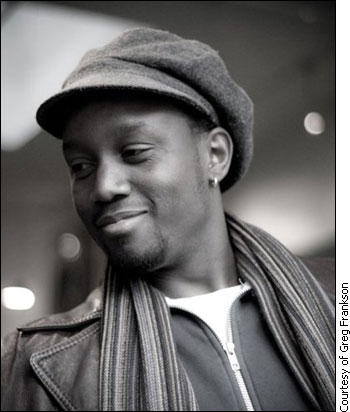
Greg “Ritallin” Frankson can stimulate audiences’ brains.

At the Capital Slams, performers seem mostly to fall between ages 25 and 40.  But the show is all ages; the audience consists of everyone, from teens to people who probably have teenaged grandchildren.

The long and the short of slam

The history of slam starts with Marc Kelly Smith and the Uptown Poetry Slam at the Green Mill in Chicago in the 1980s. It was all about trying something new, taking performance to the next level, having fun, but most of all was about opening up poetry to everyone. Smith says that at the time in Chicago, average poetry shows would draw in 15 people at most, and were “staid, formal, and really quite boring.”

Smith says, “The show’s always been a place where you can push the boundaries of what poetry was meant to be.” The stage of the Green Mill has been graced with everything from classical forms of poetry to group sketches to a 78-year-old woman reciting poetry while performing yoga exercises.

The name “slam poetry” came from Smith watching a Chicago Cubs game. The phrase “grand slam” kept coming up, which brought “slam dancing” to mind and all the energy and power that those ideas contain. He says he was also unsure about whether or not the shows would be a success, so he also liked the idea of calling them slams because “it could be a grand slam, or it could be that we’ll slam the door in your face.”

Since Smith’s first show, in 1984, slam has spread across North America and through Europe as well. Smith says that time and again, he sees people come to one of his slams and then go home and start their own shows that become immensely popular.

But a boys’ club?

Although there is always a level of diversity in the scene, Priske points to the lack of female poets coming to perform at the Ottawa slams. There are usually only one or two female participants per show of 12 performers or more.

Danielle K.L. Gregoire has been a poet in Ottawa for years and one of the first slam masters of Capital Slam. She now lives in Lanark County and organizes the Lanark County Live Poets Society (LiPS). She says there used to be more female performers in Ottawa, but recent seasons have seen fewer and fewer.

“It seems like a self-fulfilling prophecy,” says Gregoire. “The less we see ourselves represented on stage, the less likely women are to get up there.”

‘Young professionals, public servants sitting alongside the goths and hippies. Everybody comes.’ — poet Greg Frankson

Josie Frank just started performing slam poetry this year and says that although she has felt comfortable and safe entering the scene, there have been very few female role models. She says that this could be a result of the type of confessional poetry many women write.

“In my experience, the political poetry tends to receive higher scores, and not many female poets perform political pieces,” says Frank.

This male predominance notwithstanding, Ottawa’s slam poetry scene has grown exponentially.  Five years ago, local poets only had one monthly chance to perform; now there are usually eight or nine monthly opportunities to perform at different shows in the Ottawa area.  Poets from the original slams now run their own shows across town, and the inspiration from the old poets drives an influx of new poets.

“Our poets continue to flourish because of all those opportunities to practise and get better,” says Frankson.


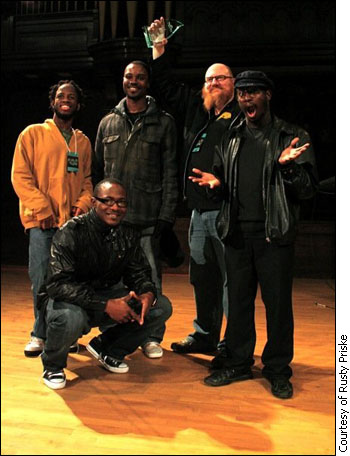
Ottawa’s national slam team (from left: Brandon Wint, Komi Olafimihan, Ikenna Onyegbula, Rusty Priske, Ian Keteku).

A cycle of poetic inspiration

Apart from a Facebook group, the Capital Slam does no promotion. The shows sell out time after time from word of mouth. Priske says, “People know about it; they want it, and I don’t see an end to that.”

Karl Roth, 21, is a university student and a first-time audience member. He says he heard about slam through a friend and decided to sample a Mercury Lounge show.

“It was a great experience; I’ll definitely go back,” says Roth. Although he probably would never perform himself, he says he really enjoyed the show’s relaxed atmosphere and enjoyed the poetry more than he expected.

Priske says that it comes down to getting new people interested and new poets involved. “Once [somebody] goes to one, they walk away with that one thing that they remember,” he says.

The year 2010 promises to be an even bigger year for spoken word, as Ottawa has been chosen to host The Canadian Festival of Spoken Word. Ottawa’s new team will have to defend their title against competitors from all over the country.

But as Frankson says, “The future is bright.”


Related Links

Capital Slam Website

Marc Kelly Smith’s Website

Greg ‘Ritallin’ Frankson’s Website

Canadian women’s roller derby revival

Ottawa resident Natalie Campbell is far from your typical female amateur athlete. Under her alias, Drunky Brewster — a combination of her childhood nickname and adult habits — she does it all, routinely hitting, blocking and falling, all while sporting a cleavage-baring top.

Campbell plays for the Ottawa-area Slaughter Daughters in one of Canada’s fastest-growing, full-contact women’s skating sports. And no, it’s not hockey. It’s roller derby.


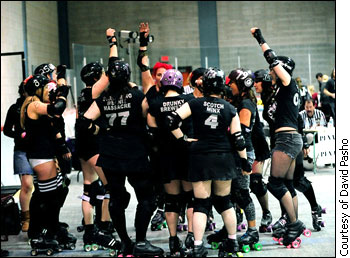
The Slaughter Daughters psych up for a bout at Montreal’s Beast of the East Tournament.

This rough lifestyle has come at a price to Campbell, who has sometimes suffered from track rash: a diamond-patterned irritation caused by falling onto the asphalt when wearing fishnets.

Due to other injuries, Campbell (who works as a graphic designer by day) hasn’t had feeling in her left buttocks for over a year. “My skates came out from under me and I ended up having a black bruise that took up my entire butt cheek for three months.” And compared to other girls in her league, the Rideau Valley Roller Girls, she’s one of the lucky ones.

Catching a wave

Once widely popular with TV audiences and amateur contestants of both genders, roller derby saw its appeal plummet in the late 1970s but has recently undergone a resurgence at an independent, grassroots level. Since 2003, roller derby has grown exponentially in North America. In five years, the Women’s Flat Track Derby Association (WFTDA) has gone from seven teams to 79 leagues across North America. Canada alone boasts about 23 leagues.

This new roller derby has garnered great attention; over 2000 fans attended the WFTDA’s regional and national championships. In the Ottawa region, the Rideau Valley Roller Girls’ bouts often sell out, sometimes with upwards of 800 fans.

For an amateur sport in Canada, roller derby has managed to attract huge crowds and increasing numbers of women wanting to try the sport. The question is why? Or at least why now?

Carolyn Storms, a sociologist at the State University of New York at Buffalo, thinks roller derby’s resurgence could be part of a larger trend toward violent sports, such for example the popular mixed martial arts competition Ultimate Fighting Championship.

Derby’s aggressive nature has certainly contributed to its rising popularity; however, many girls also say they have gotten involved with the skating sport because of its pro-female attitudes, its opportunities for roller skating and its novelty.

Modern roller derby is played on a flat track, which means teams can use any flat surface like a gym or parking lot. Each team sends out five players who skate in a pack during two-minute periods called “jams.” Points are scored when one player for each team, entitled “the jammer,” laps the pack while the other four players attempt to block the other team’s jammer from passing.


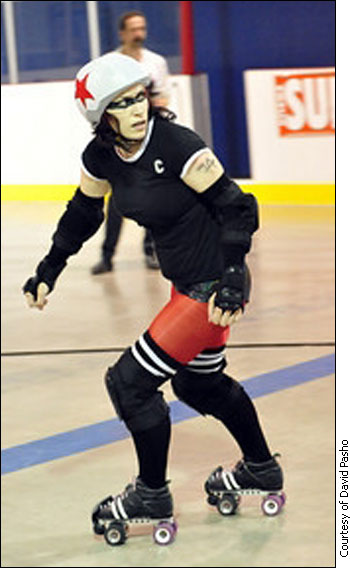
About to pounce: The Slaughter Daughters’ jammer prepares to lap the pack.

For women only

Montreal Roller Derby was one of the first leagues formed in Canada, in 2006. Montreal derby girl Cheryl Gladu (professional name: Ewan Wotarmy, or “You and what army?”) says that because the resurgent sport is predominantly female, it appeals to women who are tired of being undervalued in male-dominated institutions.

“Women are always the sideshow, just playing watered-down versions of male sports,” she says. “This is all about women playing a sport for women.”

Female bonding is a huge draw to the sport. Derby girls often are very close, on and off the track.

“The sense of the camaraderie in the league is unreal,” Gladu says. “I have a strong attachment to the women in a way I’ve never had in another sport.”

Derby girls aren’t in it only to socialize; they’re there also for love of roller skating and performance.

Kelly McAlear (Honey Bee), founder of the Ottawa Roller Derby league, sought to bring the sport to Ottawa after it had caught on in Montreal. She travelled every Tuesday to learn the ropes from the Montreal girls, and bought used skates to start her own league. She says she worked hard to revive the sport because she had loved roller skating as a kid and was always curious about derby.

Nancy Finley, a sociologist who has studied derby for over two years, agrees that roller skates are appealing to women.

“A lot of women feel really empowered skating. I see a lot of women who say, ‘I haven’t done this since I was a kid. I was always proud of myself when I was on skates,’” she observes.

‘A lot of women feel really empowered skating.’ — sociologist Nancy Finley

This is especially true for Canadian women, who have grown up with the ice traditions of hockey and recreational skating.

Gladu, a former hockey player, says although Canadian girls picked up derby later than Americans, they are catching up quickly because foundations in ice skating are transferable to roller skates.

She switched from hockey to derby after attending Montreal’s championship bout in 2008. “It was the biggest spectacle I’d ever seen for women’s amateur sport. You have hundreds of people cheering you on.”

A crowd-pleasing spectacle

The fans of roller derby in Canada are dedicated and growing. Montreal’s games are consistently sold out, and promoters have even began to sell Montreal derby merchandise like t-shirts, pins and beer cozies.

Finley says derby attracts more fans than your average amateur softball game because of the “talking dog syndrome”: people want to come see something unusual.

And with sassy derby names, skimpy costumes and bad-girl attitudes, derby really is like no other amateur sport.

Blackout Susan, Sister Disaster, Screaming Meanie Massacre and Scotch Minx: derby girl names can range from sexy to vicious but must be original. No two girls can have the same name.

Outfit choices also range from a sexy spectacle to simple and athletic. However, whether a girl comes out in fishnets or work-out shorts, she must cover herself up with protective padding; wrist guards, elbow pads, knee pads and helmets are a must.


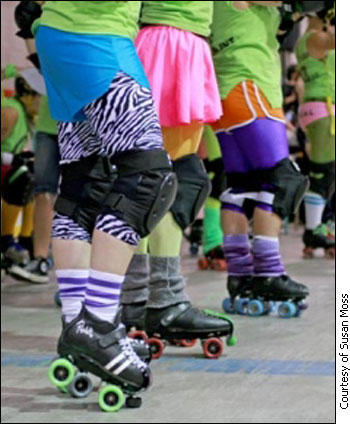
Neon duds worn by Montreal’s New Skids on the Block take sports gear to a new level.

Gabriell Garcia (Chica Loca), the marketing chair for the WFTDA, says adornments like the names and costumes have contributed to derby’s rapid growth.

“It’s a full-contact sport where women are being aggressive but being feminine and staying true to their femininity.  So it’s a really exciting show as well as sport,” she says.

Not for faint hearts

But roller derby encounters debate because of its aggressive nature.

Campbell admits the risk for injury is high. “Recently we played a game, and our biggest hitter broke her ankle, like it shattered,” she says. “Collar bone breaks are also common. Everybody’s always bruised up.”

However, Campbell says she risks injury because the physicality is what attracted her to roller derby. “It’s a sport where you’re encouraged to be more aggressive, and I feel like a lot of women aren’t often encouraged to be competitive and vicious.”

Some women feel the sport doesn’t need to be aggressive to be fun. McAlear has recently reformatted her league, Ottawa Roller Derby, to cut out hitting.

“Over the last three years I’ve seen a lot of bad stuff, and being at the hospital isn’t fun,” she says. “You need to respect those who don’t want to be hit. They should be able to have fun and be on skates too.”

It seems there is a market for the low-impact derby envisioned by McAlear. Her several open houses to pitch the idea have consistently brought crowded attendance and a waiting list.

Whether contact or non-contact, women’s roller derby has definitely roused a lot of interest in Canada. When asked what the future holds for the sport, Garcia of the WFTDA jokingly answers, “World domination.” But although she thinks it will keep growing, she also thinks modern derby should stay true to its grassroots.

At the team level, Campbell is just happy Ottawa has embraced the sport. Her Rideau Valley Roller Girls league is in the midst of introducing a new team, the Riot Squad; and with more girls in the league, the potential for travel to other cities will increase in the upcoming season.

However, even “if the sport doesn’t get any bigger, I don’t care, because I’m really happy with derby in Ottawa,” Campbell explains. “I’m excited to see what’s going to happen, and I know it’s going to be good.”

Related Links

Rideau Valley Roller Girls

Ottawa Roller Derby

Montreal Roller Derby

WFTDA