A capital place to film?

It’s no secret that many of America’s biggest movies are actually shot in Canada. Big-name films like Total Recall, Twilight and The Day After Tomorrow were shot in Toronto, Vancouver and Montreal, respectively. In fact, these three cities pop up in nearly every discussion of Hollywood filming in our home and native land. Other major cities, like Calgary, Winnipeg and even Halifax are mentioned from time to time.


Ottawa equates to a generic city, in a scene for the 2011 Lifetime movie Another Man’s Wife.

But what about Ottawa? What films have been shot here? This list is surprisingly short. Sure, a few well known films like Batman and Robin, The Sum of All Fears and most recently House at the End of the Street used Ottawa for part of their shooting schedule, but the city still can’t compete with the other major shooting locations in Canada.

As Canada’s fourth-largest city, and the second-largest in Ontario population-wise, Ottawa logically should have a decent number of people interested in developing the local film and television industry. Yet this list is also surprisingly short. Near the top of it is the name Neil Bregman. As founder and president of Ottawa’s largest film production company and a producer of countless films, Bregman has plenty of experience under his belt. His company, Sound Venture Productions, has evolved over the years from focusing on radio commercials and audio production to film and television productions and more. Some of Bregman’s most recent work includes producing the made-for-television movies Fugitive at 17, My Mother’s Secret and The Wife He Met Online. All three were filmed in Ottawa.

Bregman sat on the board of directors for both the Canadian Film and Television Production Association and the Ottawa-Gatineau Film and Television Development Corporation, for nine and four years, respectively. He chose to leave the CFTPA, while the OGFTDC was dissolved. Bregman worked very hard to develop a film industry for the city, but despite his best efforts, he could do only so much.

“It’s just not a production town; it’s a government town,” he explains. “There’s never really been a lot of effort into attracting business here. We don’t have a lot of infrastructure or critical mass, so it’s a struggle to work here.”

Ottawa’s filming challenges

‘We don’t have a lot of infrastructure or critical mass, so it’s a struggle to work here.’ — producer Neil Bregman

Bregman says creative and human resources are a large part of the infrastructure that Ottawa needs, to grow its industry. There needs to be equipment and rental services, production facilities and the talented people to attract other people and companies to the area. Even tax incentives, something to attract productions, prove to be a pain, according to Bregman. “Our boundary is split between Ontario and Quebec, and that makes the provincial tax credit evaluations very difficult. This makes things more complicated than necessary, and many don’t like dealing with that.”

One of the other missing pieces to the puzzle is a sound stage, a building used for film and television productions. Most other major Canadian cities all have at least one sound stage, allowing for indoor sets or even motion capture for scenes requiring extensive computer-generated imagery. Without a sound stage, Ottawa doesn’t offer enough to attract local or foreign production companies.

“All the really good people don’t stay here. It’s hard to build the critical mass to keep people here without the incentives that are necessary to attract business and keep it going here,” Bregman says. “That’s something that Invest Ottawa is trying to do.”

Putting Ottawa on the A-list


Geneviève Ménard-Hayles is the commissioner of the Film, Television, and Digital Media office at Invest Ottawa.

Invest Ottawa is the city’s not-so-secret weapon trying to do what couldn’t be done in the past: develop and grow a viable film industry. The company’s Film, Television, and Digital Media office works with the City of Ottawa to help attract film and television productions. The FTDM office also collaborates with the National Capital Commission to review applications before issuing any filming permits. Certain high-profile areas, like Parliament Hill or the city’s schools, can be filmed only under certain circumstances. For example, a horror movie probably wouldn’t be allowed to be shot inside Parliament, but a Jack Layton biography would have a much better chance.

Much of the FTDM office’s work is left in the hands of Commissioner Geneviève Ménard-Hayles. Being essentially in charge of this whole operation, Ménard-Hayles is a very busy person. In fact, when reached for comment, she had just returned from a Los Angeles trip the night before. She was there on a mission to get big studios interested in Ottawa. Ménard-Hayles acts as a sort of envoy between Ottawa and various production companies, to show them what this city is all about.

“I had over 30 appointments specifically for Ottawa, to get these production companies such as Warner, Disney and Paramount to think about Ottawa,” she says. “They were very happy to hear from us because it’s a new destination — it’s fresh. The locations haven’t been used; it’s film-friendly; and the cost of shooting is cheaper than Toronto, Montreal and Vancouver. So it’s a huge competitive advantage for our region.”

While a lot of focus has been on shooting costs, Ménard-Hayles mentions the variety of locations. “The roster of locations we have to offer here in Ottawa is something the studios are really keen to know more about and explore with us,” she says. “Being able to shoot at one location downtown, and 20 minutes later you’re on a lakeside somewhere else, is something completely different.” The short travel time between Ottawa locations may provide an edge, compared to other popular shooting destinations.

A sound idea

‘Being able to shoot at one location downtown, and twenty minutes later you’re on a lakeside somewhere, is something completely different.’ — promoter Geneviève Ménard-Hayles

Ménard-Hayles also acknowledges the need for a sound stage. “If we don’t build this, we just aren’t going to be able to grow our industry. This is what is needed to take us to the next level.” Invest Ottawa had put up $1.5 million towards the construction of a sound stage late in 2012, and several companies put in bids to receive such funding. Neil Bregman, backed by many key players in Ottawa as well as a company from L.A., had put in a bid. By January 2013 Invest Ottawa rejected Bregman’s bid without giving any reason. Bregman says the sound stage funding will go towards a company from Toronto, but details are still scarce as Invest Ottawa has remained tight-lipped.

With a sound stage in place, Ménard-Hayles says she believes Ottawa really will be a one-stop shop for many films. Bregman says he is more skeptical, explaining that a sound stage elaborate enough to attract larger productions may be out of Ottawa’s reach at the moment. “People who go to sound stages expect a certain level of facilities, infrastructure, resources and experience. They’re a very difficult thing to compete with when you’re talking about Montreal, Toronto or Vancouver.”

He says the city should expect a sound stage geared towards smaller low-budget productions, a point Ménard-Hayles also makes clear. Ottawa already has numerous companies in the city dedicated to smaller productions. These include Zed Filmworks, which co-produced the recent House at the End of the Street, and Affinity Productions, which specializes in production and post-production services for smaller companies.


A strong political lobby? The 2013 film The Perfect Boss made good use of several Ottawa building interiors.

Aside from children’s programming animation, Affinity Productions has a tendency to work with non-fiction productions, but this is something that may change in the future, according to Post-production Supervisor David Zimmerley.

“While we are not currently in the business of producing fiction, we already offer a variety of services to a number of fiction features each year,” he explains. “Our client base is very mixed, and as our client base expands in the coming years, so will the services they may require.”

Since many local companies deal with government or corporate videos, shifting their focus would be necessary to further develop the local film industry. Otherwise, Ottawa will have to rely on foreign companies, like the ones Ménard-Hayles talked to while in L.A.

Despite Bregman’s skepticism (or is it realism?), the future may be bright for Ottawa, once the sound stage is built and the city’s infrastructure is improved upon. Ménard-Hayles seems to think so.

“Ottawa has been named one of the top creative cities in Canada, but nobody has really told the story. So our goal for 2013 is to let everybody know what will be happening in Ottawa. We’re going to tell that story through what we’re doing for our film industry.”
Spicing up Ottawa’s street food scene

Curried pumpkin soup, crispy polenta with porkbelly and homemade donuts may not seem the kind of food acquired at roadside, but thanks to a new batch of street vendors, that’s just a sampling of what’s being served on Ottawa streets.

Ottawa foodies have been chomping at the bit for the vibrant street food scene that’s been trending in the U.S. for several years, with gourmet food-on-wheels available in almost every major city. (Portland, Oregon, in particular has become known as the capital of street food.) Thanks to an October 2012 Ottawa city council vote, the city seems finally to be moving to embrace this latest food craze.

In an attempt to change Ottawa’s reputation as the “city that fun forgot,” councillors voted to add 20 new spaces for food trucks and carts on city property, bringing the total city spots to 64, in hopes that the addition will help foster the kind of vibrant and eclectic culture that’s become synonymous with street food.

“We see this as an opportunity to complement not just our festival and fair scene but also the other things we have going on, with a unique street food opportunity,” said Councillor Mark Taylor, the man at the helm of the project.

Young adults’ obsessions with food and social media, together with the time pressures of urban lifestyle, are fuelling street food’s surge.  “Foodies” depend on their favourite food trucks to deliver gourmet satisfaction in a fraction of the time and for a fraction of the price of the traditional bricks-and-mortar restaurant.  The enthusiasm has even spawned a television series, Eat Street, which documents some of the most popular food trucks in North America and the U.K., whose offerings range from creative spins on the hot dog (including one smothered in macaroni and cheese) to such exotica as crocodile gumbo.

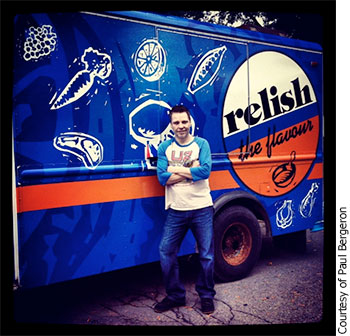
Paul Bergeron stands in front of his truck "Relish"
Paul Bergeron at his eye-catching “Relish” truck: a rotating gourmet menu so popular that he’s often sold out before 3 pm.

Ottawa’s street food scene has seemed lacking for enthusiasts like Kathy Ferguson, an Ottawa-based blogger for Eat Street’s website, who has eaten at more than 110 food trucks across North America. It’s no surprise, she said, that Ottawa’s conservative nature has kept it from fully embracing the trend.

In the last few years, however, trucks like “Relish,” “Stone Soup Foodworks” and “Trailer Pork Boys” have opened, providing Ottawans a convenient taste of both the staple and gourmet food options. Many of these gourmet food trucks were at the time required to open on private property, due to the city’s prior restrictions on street vending. But the newly authorized spaces will allow trucks to do more business on city property.

Paul Bergeron, owner of “Relish” — a food truck parked at the University of Ottawa campus whose offerings range from gourmet macaroni and cheese to chimichurri beef hamburgers and even gluten-free fare — said it’s not surprising that people are interested in street food. In fact, he said, in many cultures, especially in Asia, street food has always been the best way to eat.

“Everyone else has known that for hundreds of years; it’s just taken Canada a little longer,” said Bergeron.

The trucks themselves are as bold as the food they serve. “The Feisty Jack,” a truck in Toronto that offers updated classic British food, is covered in the image of a Union Jack (with teeth!) and boasts the slogan “Keep calm and aim for the mouth.”

Part of the draw, according to Ferguson, is the personality of the vendors themselves, and their passion for food — something that shines through in Bergeron’s ever-changing menu.

“I just want to put out a good product.  And I like to see the reward that I get usually instantly,” said Bergeron. “That’s what keeps me going.”

Good food, fast

“The compelling nature of street food is kind of the same thing that compels people to go to festivals and fairs,” Councillor Taylor said. “People, especially the younger generation, want to be wired in and hip, and they want to feel connected to their community in entertaining and integrative ways.”

A major goal is that Ottawa food trucks will act as a draw for tourists, Taylor said. Having good, unique, immediate food available will tie into a mindset of being able to venture out for a day in the city without having to worry about food. Many of Ottawa’s trucks operate year-round, but thrive during summer festival months when tourism and foot traffic peak.

The reality is that food trucks do not have a single audience; they appeal to anyone looking for good food, fast. Both of the trucks on the University of Ottawa campus cater primarily to the student population, while trucks like “Chef on Wheels” or the hot dog cart at Bank and Laurier sell mostly to the business people in the downtown core. Trucks operate throughout town, appealing to all sorts of demographics: late-night snackers or just anyone rushing for lunch at noon.

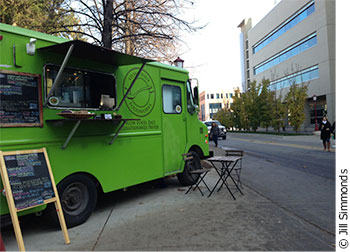
The Stone Soup Food works truck on the University of Ottawa campus
Green machine: Stone Soup Food Works is open Monday to Friday, serving grateful students at the University of Ottawa.

Social media are part of the trend. Bergeron keeps fans updated on his truck’s daily menu via Facebook and Twitter and has even expanded into photographing his food with help of his iPhone and Instagram account. In some other cities, followers can download iPhone Apps which direct them to the nearest mobile vendor based on their own GPS location.

According to Jennifer Demarre, co-owner of Ottawa’s “Trailer Pork Boys” (a food truck serving classics like pulled pork sandwiches), a social media presence is just as important as a great menu.

As to why Ottawa has lagged in the food truck phenomenon, Demarre blames a number of prohibitive laws. For example, until 2007, hot dogs were among the only things allowed to be sold on city streets. Further, due to space restrictions, most Ottawa trucks are stationary all day, while trucks in U.S. cities often are allowed to follow the crowds.

Furthermore, says Demarre, weather conditions here differ from those in Portland and Los Angeles. In the end, harsh winters that reduce foot traffic and complicate truck maintenance may yet prove too much of a barrier for any real street food community.

‘Please, sir, can we have some more?’

The 20 new spaces will be awarded through a selection process wherein a panel (including Councillor Taylor, an Ottawa Public Health representative, a Canadian Culinary Federation member, a local restaurateur, and others) will judge prospective vendors. “It’s going to be kind of a talent contest,” Taylor said.

The city received 61 applications for the new spots (45 applications for trucks, 16 for carts) and will announce the recipients in early 2013. Vendors are being judged based on business plan,  “unit design,” vendor experience, “overall readiness” and “menu diversity and innovation,” Taylor said.

A cup of Stone Soup Food Works' homemade tomato and kale soup
Fresh off the truck: Stone Soup Foodworks makes all its soups, sandwiches and tacos with local and organic ingredients.

Prior to the council vote, there have been 69 food trucks operating in Ottawa, of which only 19 have been allowed on city property. Many trucks, like “Relish” and “Trailer Pork Boys,” operate on private property. The new city-property spots are located throughout town, some near Sparks Street Mall, Confederation Park, and Dundonland Park, as well as in the St. Laurent mall area and in Stittsville. Notably lacking are spots in the ByWard market.

The hope is that the initiative will emulate Vancouver’s highly successful 2010 pilot project (see sidebar).

Critics of the selection process say it’s unfair for the city to regulate applicant-vendors’ menus and that just because someone might lack food-industry experience doesn’t mean he or she wouldn’t thrive with street food. But the goal, Taylor said, is to encourage a variety of different food options and a little ingenuity, to add spice to Ottawa’s stale street scene.

However, Councillor Rick Chiarelli was firm in asserting that it is not the city’s place to determine vendors’ menus. The city, he said, shouldn’t try to outguess the business people — they know what their customers want. Chiarelli explained that the city would never try to regulate a restaurant’s menu, so why meddle with an applicant-vendor’s menu?

The panel’s criteria will not affect existing vendors, but the hope is that such criteria will encourage a more diverse range in available street food.

“We can’t always stay the same; it’s got to change,” said Terry Scanlon who has been selling hot dogs and sausages on the corner of Bank and Laurier Streets since 1982. “This is a good time for it to change, especially in the capital city.”

The street food industry provides a unique opportunity for vendors, as it does for patrons, Scanlon said. As compared to opening a restaurant, starting a food truck or cart business requires much less investment and risk, while providing great potential for creativity and an entrée to the culinary scene.

So, will street food prove to be Ottawa’s ticket to a new life as Fun City? While people like Ferguson are hopeful, Chiarelli maintains it’ll take more than a few gourmet hamburgers to reinvent Ottawa.

“If you’re looking for fun,” Chiarelli said, “the city government is not the place that’s going to provide it.”

View Ottawa Food Trucks in a larger map

Fashion with a ‘Gypsy’ twist

It all started with a young woman who had too many clothes and not enough closet space. Aria Leroux is and always will be a collector of stuff. Just step across the threshold of her boutique, Gypsy & Co., at 209 Gilmour Street, and you’ll know exactly what I’m talking about. For example, it might take you a few moments to realize that the vintage bicycle you’ve been admiring and wondering about (the one leaning casually against the picture window) acts as a kind of welcome mat, signalling that you’ve arrived.

The shop is chock-full of vintage finds — 1980s crop tops and high-waisted pants, ’60s mod colour-block dresses and miniskirts, bell-bottom pants of the early ’70s — all moderately priced and at your fingertips, waiting for a new home among the quirky and imaginative patrons who frequent Gypsy & Co. in search of that one-of-a-kind item.

And find it you will. Leroux makes use of every single inch of her tiny space: To your left and right, rows of clothing line the walls. Antique furniture items, scattered throughout, display an array of vintage baubles and jewelry on pretty silver trays. A plant hanger from the ceiling houses a collection of sunglasses. Like pieces of artwork, necklaces hang from tacks pushed into the walls.  A gilded, high-backed couch at the shop’s front provides customers with a comfortable perch on which to watch the world go by.


A soothing abundance.  As well as clothes and jewelry, Gypsy offers a cafe section where clients can sip tea and feel at home.

An alcove at the back of the room serves as the shop’s kitchen, which is not just for show. Leroux and her business partner, Veronica Michelle, also operate a cafe. Each menu item is named after the ladies’ favourite “local faces and places,” says Michelle. “The Rockalily” (a sandwich made of granny smith apple, peach chutney and old white cheddar cheese) is named after the burlesque troupe that Leroux and Michelle belong to. And a music store called Record Shaap operates in the boutique’s basement, selling CDs and vinyl records. Leroux doesn’t own the record store but says she often gets owner Matty McGovern to supply music for cocktail and costume parties hosted at Gypsy.

Opened last spring, Gypsy & Co. is still a new kid on the block, yet it was nominated this past October for “Best Vintage Shop in Ottawa” by Ottawa (X)Press, the city’s alternative weekly entertainment guide. Other contenders included Ragtime, Young Janes and Attic, and although Ragtime snagged the coveted title, Leroux says she is honoured to have been included among such vintage veterans (“Ragtime’s been around for, like, 30 years,” she mentions) and says it was “totally mind-blowing” that Gypsy took first-place runner-up.

In fact, Leroux — who began by selling clothes online and who recently opened a second Gypsy & Co. store, on Dalhousie Street — says she was surprised just by the nomination itself. But then again, a self-deprecating attitude is part of her charm.

Gypsy’s price tags are marked no higher than $200 — a rarity in the finer vintage clothing business — and even in that range they seem a bargain: The pricier pieces tend to be unique staples of vintage fashion that you’d be crazy to pass up. “This space is as student-oriented as it can be without having to close,” Leroux says of her prices.

In fact, Gypsy’s prices are meant to be competitive even with huge retail clothing outlets such as at the Rideau Centre. For Leroux’s loyal customers, buying local trumps buying corporate any day. And it’s the ultimate form of recycling, she says.

Seeking that edge

Leroux makes an impression personally, as well. With fiery red bangs cropped neatly across her forehead, a number of facial piercings dotting her top lip and cheek, and a curvaceous figure that could rival Marilyn Monroe’s, she reminds me of a friend’s cooler big sister.

‘This space is as student-oriented as it can be without having to close.’ — owner Aria Leroux, on her prices

And why has Gypsy & Co. developed such a loyal following in its short history so far? Part of the answer surely lies in Leroux’s work ethic and ability to adapt quickly to supply and demand.

There are lots of people in the vintage clothing business in Ottawa right now, she says, so she relies on resourcefulness to help her shop stand out. “I might not get every beautiful ’50s prom dress that you can occasionally find in, like, the back bin at Value Village. You know, it’s me and like, eight other people that are fighting for that. But I’ll take something that someone else might overlook and be able to turn it into something equally amazing.”

This conscientious approach is evident in many aspects of her boutique. In addition to the (as she says) “painstakingly handpicked” garments and accessories that line the shelves and racks, Gypsy & Co. carries a plus size and menswear line, two things that Leroux says the Ottawa vintage scene currently lacks.

Regarding menswear particularly, Leroux says she absolutely put her foot down, pledging to carry a decent collection. The shop boasts a sizable array of sports jackets, coats, pullovers and sweaters.


Accessory treats.  Vintage baubles and jewelry are served up temptingly, throughout the shop, on antique boudoir trays.

Originally from Vancouver, where vintage has always been a “huge fashion staple,” she now uses her West Coast connections to keep Gypsy supplied from beyond Ontario. Her last big hometown haul came east in four large suitcases, none of which was packed with any of her own clothes. Other pieces come from the Maritimes, and the shop features Leroux’s own handmade line, recycled from used clothing (“Unless it’s a rag, it can be turned into something else” she says) and vintage fabric and material.

Timeless elegance

“Vintage fashion is almost like antique hunting,” says Cate Lorimer, a contributor to The Genteel, an online fashion magazine. “You almost become, like, a collector.” Lorimer goes only to thrift shops for her clothing and says she often finds items for pennies that look like something you could grab off the rack at H&M.

“It’s just become such a fashion movement: having something vintage or used. It has a special ring to it now,” Lorimer says. A lot of the appeal comes from runway and media-reported trends, she adds.


Fashion sphinx: Gypsy & Co. owner Aria Leroux in her element.

Lorimer says she has noticed many celebrities opting to wear vintage-inspired gowns and suits on the red carpet and notes that consumers, both men and women, look to awards season as a way to inspire day-to-day clothing choices.

Part of vintage’s appeal is its aura of longevity, Lorimer adds: “The things that you do see in a vintage store are usually the things that are so classic and timeless that you can wear them forever. There’s something really special about that.”

And Leroux’s selection certainly mirrors this ideology. Every piece passes through her skilled hands. She spends anywhere from half an hour to three hours on each garment, depending on how much restoration it needs. Pieces from the ’40s and ’50s require some research beforehand. This way, the original design stays as authentic as possible. Before it hits the racks, each piece is professionally laundered.

“I’m such a romantic. That’s really what it is. That’s what it comes down to. And to be able to breathe life into these garments, these physical manifestations of history, is really amazing to me,” Leroux says. “And just making people happy.”

Says Gypsy customer Jessica Hewson, “It makes me feel like I just stepped through a time portal to the 1950s or ’60s. I love it, almost as much as I love shopping in my grandmother’s closet, where things are free!”

“If I could design a perfect place I wanted to go, this would probably be it,” jokes Leroux, gesturing around the shop. “It’s like, it’s a vintage store and there’s a record store in the basement and, oh, guess what? They have vegetarian food.”

Luxe, Calme et Volupté

Nerdlesque: worshipping the geek gods

From the number of video games that Del Roba references in casual conversation, her Xbox gaming console must have provided marathons of dedicated play.

Now, that Xbox is shattered in pieces — smashed by Roba not as a result of a frustrating loss, but because she needed to wear it to her job.

Roba, whose real name is Frankie, is the founder of the Ottawa-based Browncoats Burlesque, a one-year-old burlesque troupe that celebrates fringe-culture enthusiasms in an onstage form of burlesque now burgeoning in North America called “nerdlesque.”  Browncoats Burlesque — a reference to the cult TV show Firefly — features acts with such nerdy themes as cult movies, comic books and video games (hence the costume composed of Xbox hardware).

Browncoats Burlesque
Geek chic. Ottawa’s Browncoats Burlesque troupe features Del Roba, top, and Foxie DeVille, second from left.

Browncoats Burlesque is one of several burlesque troupes across North America to showcase nerdlesque, but this quirky subgenre has grown in popularity only within the past two years.  One early notable troupe of this emergence was formed in 2008 under the name Nerdlesque to be a monthly burlesque series exploring nerd culture.  Since then, most major U.S. cities with a strong burlesque presence showcase nerdlesque acts, such as the Flaming Dames’ nerdlesque-themed show at Chicago’s New Millenium theatre company, or Skill Focus: Burlesque in Orlando, or Whedonesque Burlesque in Seattle.

For Roba, Browncoats Burlesque has been a labour of love.  The self-professed nerd says she had seen the Devil Dolls burlesque troupe in Ottawa and was inspired to create her own burlesque show, based on something she knew best.  And what what she knew best, she says, was nerd culture: video games, cult movies, science fiction series and other interests typically classified as “geeky.”

Conveniently, her first recruits for the show were friends from her live-action role-playing group, or LARP.  (LARP is an activity in which players create settings and characters and improvise scenes in a real-life setting, creating challenges for their characters not unlike storylines in video games.)

Dorks in short shorts

As risqué as burlesque is, the performance art attracts people with a variety of day jobs.  The performers with Browncoats Burlesque include workers for several branches of the government, a chef, and a neuroscience researcher.

A burlesque show can feature various sideshow performances, but the defining acts showcase performers — usually women — removing their clothes.  The main difference between burlesque dancers and other strippers is the tongue-in-cheek humour, which satirizes the sexualization of stripping.

Roba says that, friends and supporters aside, their audiences tend to span a variety of demographics.  She says that nerdlesque has a strong marketplace appeal.

“Nerdlesque is definitely something I think people can get behind. I find people are more able to relate to the performances than with some other styles of burlesque,” she says. “Most people can feel for the awkward nerd just trying to be cool.  Nerdlesque, in many ways, is a form of ‘fan fiction’ amongst the many that make up ‘fanculture’. That equals an army of nerds that could possibly get behind nerdlesque.”

‘My influences are ballet and video games.’ — Foxie DeVille

Aside from group numbers, the members of Browncoats Burlesque write and choreograph their own acts.  Under the wide umbrella of “nerdiness,” the range of ideas seems unlimited.

You’ll find, for example, a fervent Batman fan parading as the villains Poison Ivy and Harley Quinn, and an avid gamer pulled off a complicated ode to the computer game Tetris.  Performers say nerdlesque allows them to express and embrace the niche interests of their personal lives.

Foxie DeVille (who has asked to print her stage name to preserve her privacy) says she already had a background in burlesque before joining the Browncoats Burlesque.  The classically trained dancer lists-off a number of Hollywood influences that attracted her to more complicated choreography, such as a dance using large fans.  Despite her traditional training, she says she feels inspired by creative opportunities with the pop culture references.

“My influences are ballet and video games,” she says, noting the unusual marriage of the two hobbies.

At last Halloween’s show Freeks N Geeks, Roba performed a number based on the cult film Attack of the Killer Tomatoes, which she says she chose based on her passion for critically and commercially unsuccessful movies.  The emcees gave the audience red balls to throw at her during the performance, symbolizing a downpour of tomatoes from the film.  Though at first uncertain whether the audience would participate, she says that she was so impressed with the audience’s gusto in their throws that she cheerfully smiled and thanked the crowd when she was supposed to pretend she was dead.

“Audience interaction is pretty awesome,” says DeVille.  She says that although the audience doesn’t always understand the reference, they engage with the comedy and light-hearted nature of nerdlesque, more than with other burlesque shows.

Enthusiastic audience responses like these have encouraged the spread of nerdlesque troupes and individual acts, which in the United States now range from Seattle to New York City.  Montreal and Toronto feature individual nerdlesque acts, but Browncoats Burlesque is currently the only full-time, nerdlesque-only troupe in Canada.

Revenge of the nerds

NYC Nerdlesque
Software and hardware. New York City’s Nerdlesque boldly goes nude where no nerd has gone before.

Chris Chappell is a co-producer of the New York City–based troupe Nerdlesque, which is a joint venture between Sneaky Snake Productions and Captain Sharky’s Historical Gender Equality Reactualization.

Chappell says he suspects that the rise in nerdlesque groups across North America can be attributed partly to a general cultural shift.

“There’s this really complicated intersection of hipness and nerdiness,” says Chappell.  “There’s a mainstreaming of a lot of these [nerdy] things.”  In other words, “geek is chic”: It currently is trendy to celebrate the otherness of traditional nerd interests, and this new value is reflected onstage.

He says that in North America nerd pride is on the rise. “People have really incorporated that into their idea of culture.  And [nerd appeal in the arts] is happening organically as a result.”

Yet Chappell says there is a danger of not sufficiently honouring the original material from which nerdlesque troupes draw their references, indicating concern about taking away some of the substance of nerdy sources after they’ve hit the mainstream.  Still, he says nerdiness is a “vibrant trend and community,” and his troupe is proud to be a part of that.

For Browncoats Burlesque, whose acts have such personal significance to the performers, honouring the nerdy references is a priority.

Above all, though, the performers insist on one key component.

“Basically, we want everybody to have fun.  That’s all we’re really trying to do,” says Roba.

Even if it means smashing her prized Xbox for the show.

Quartier Vanier: nowhere to go but up?

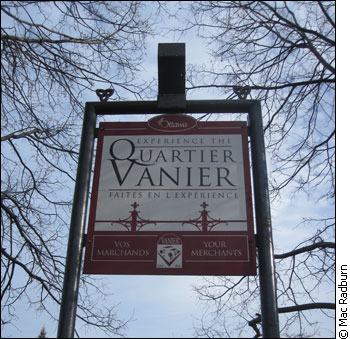
At the east end of Cummings Bridge, minutes from downtown Ottawa, a sign at the corner of Montreal and North River Roads announces, in elegant 17th-century-style typeface, your arrival in Quartier Vanier.

The “Quartier” moniker is a recent addition to the traditional “Vanier,” part nod to the area’s largely francophone roots, part re-branding effort for a neighbourhood of the nation’s capital widely seen as down on its luck.

A Quartier Vanier sign installed by the area's BIA.
A good sign? Vanier’s entry points now sport handsome boundary markers, courtesy of the local Merchants Association.

Influenced by sensationalist media stories, many Ottawa residents have come to view Vanier as synonymous with problems such as crime, homelessness, prostitution and drug abuse.

These days, however, Vanier seems to be going through a renaissance of sorts. Though still plagued by social and reputation issues, the area is also seeing gentrification as people gauge the potential of Ottawa’s most notorious ’hood.

Residential property sales prices are up almost 20 per cent this year, according to Roch St-Georges, a real estate agent specializing in Vanier. “I was very surprised by the increase in selling price in the Vanier area,” St-Georges said, explaining that many clients are tearing down older houses to replace them with new ones. “There’s definitely a turn-around happening. It will take time, but it is definitely on the right track.”

Young professionals with families are flocking to the neighbourhood, due in large part to its continued affordability and proximity to the downtown core. With the recent gentrification of the Hintonburg area, Vanier now stands as the final major downtown neighbourhood to undergo urban renewal. City of Ottawa statistics indicate rising rent costs, along with a growing population. Developers are also investing in the area, constructing multi-unit properties in hopes of profiting from Vanier’s newfound trendiness.

On the cultural front, there have been positive steps as well. Montreal Road, the community’s beleaguered main artery, is being cleaned up. Alongside the pawnshops and payday loan businesses, new restaurants and shops—Bobby’s Table and Bridgehead, for example—are opening, and improvements are being made to existing structures.

‘There’s definitely a turn-around happening. It will take time, but it is definitely on the right track.’ – Roch St-Georges, real estate agent

Lang Chi Dang, the owner of Fantastic Tailors and Cleaners on Montreal Road, recently had the facade of her business completely re-done in stucco, at great expense. She says with all the positive changes in the community, her investment will pay off and could inspire others to follow suit.

Street appeal is a high priority for Dang. She says in the past, customers would express safety concerns about walking from their cars to her business. “If you drive by and you see something that makes you feel insecure, you wouldn’t stop your car and step out,” Dang said. She added, “We’ve had problems. Sometimes people come to ask for money, and there’s prostitution,” she said. “Right now there is less and less.”

Ottawa Police Service statistics reflect what neighbourhood residents already know—today’s Vanier is a safer place to work and live than the Vanier of the past. News stories from the Vanier area historically dominated Ottawa media crime coverage. Past police figures indicated more Vanier criminal activity than the city average, with less than half of all Vanier residents reporting that they felt safe when walking alone at night.

The situation has improved in recent times, however, with crime rates declining steadily since 2006, and total Criminal Code offences dropping 10.2% in Vanier in 2009. Residents also report seeing less blatant criminal activity on side streets and along Montreal Road.

Lang Chi Dang stands with her sewing machine.
Local business owner Lang Chi Dang is pioneering the neighbourhood revival.

The largest change to this stretch of road is still to come, when the Wabano Centre for Aboriginal Health completes its expansion plans for a 25,000-square-foot building (conceived by famed architect Douglas Cardinal, who designed the Canadian Museum of Civilization). To be built atop and around the existing Wabano building at Montreal Road and Altha Avenue, the new structure will serve as a Vanier landmark and completely change the streetscape, says Carlie Chase, the center’s director of initiatives. Featuring natural materials and undulating panels of glass, the $14 million-plus centre will lend itself to the revitalization of Vanier, providing valuable services and sparking further gentrification, says Chase. “It has a ripple effect. We certainly anticipate [that] the beauty of this centre—and the heart of this centre and the service impact this centre will have—will change the entire community.”

On a sunny Tuesday afternoon, the area around the centre’s future location seems ready and reflective of positive change. The sidewalks bustle with residents and passersby. People enjoy an outdoor drink on a pub patio, while multiple construction crews are busy installing new stucco facades to buildings. Then, without warning, a man on the sidewalk sways violently as he throws a cigarette butt to the ground. After an extended fumbling with his belt buckle, he undoes his pants and urinates on one of the storefronts, seemingly oblivious to passing pedestrians and cars.

In response to community complaints over similar incidents and concerns over crime, the Quartier Vanier Merchants Association has launched several initiatives over the past few years to improve safety and livability. Beautification and graffiti-removal programs have been initiated and a farmers’ market started, and regular foot patrols take place with hired security services and the Ottawa Police Service.

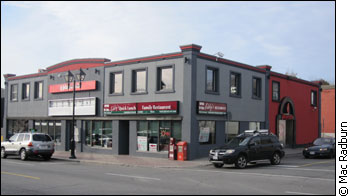
A freshly re-stuccoed building in Vanier.
A nice facade. This newly re-stuccoed building, hosting a family restaurant and a gentlemen’s club, typifies Vanier’s duality.

Still, despite the many signs of positive change in the area, residents and community leaders seem to temper their optimism as they grasp the challenges the community must unite to overcome. “There are barriers to change,” says Rideau-Vanier city councillor-elect Mathieu Fleury, who, in the October 2010 municipal election, defeated longtime incumbent Georges Bédard. Seen by many commentators as the face of the new Vanier, Fleury must find a way to balance the tensions between old and new, to successfully usher in future change.

Some Vanier constituents have already come to him with concerns over condominium developments, such as those on Landry Street, aimed at hoped-for middle-class residents. “Although people are in agreement with intensification, they do not want to see 20- and 30-storey buildings being built in the middle of residential communities,” Fleury said.

Indeed, the opening of new shops and restaurants, the perception that social problems are on the decline, the influx of new residents and the construction of trendy condos have some boosters pegging Vanier as the “next Westboro.” Though Fleury takes such remarks as a compliment, he says that Quartier Vanier will forge its own distinct path.

“There needs to be investment, there needs to be a facelift on main arteries and there needs to be community involvement through all of this. But it will be Vanier’s way—not another Westboro.”

‘Hollywood North…east’? Ottawa vies to be a moviemaking capital

Within the daytime serenity of Ottawa’s Shenkman Arts Centre, the phone never stops ringing in Roch Brunette’s small office.

With a one-person staff, Brunette is the general manager of the Ottawa Gatineau Film and Television Development Corporation (OGTF), a government-funded organization formed in 2003 to connect foreign film producers to the resources and locations they need to shoot in Ottawa.


Papineau Street in Gatineau lends a vintage look for the filming of Jack Kerouac’s On the Road, starring Garrett Hedlund (centre).

Brunette does a lot more than location scouting. He actively “sells” Ottawa to filmmakers, spending most of his time personally calling and emailing people in Los Angeles and New York City, then helping them scout locations once they agree to check out Ottawa. Since government dollars don’t go very far, Brunette can’t travel much and so does most of the legwork from his desk.

His stamina seems to be paying off, though. “What we’re seeing is a lot more direct calls from New York–based producers because they heard about Ottawa being a cool place to shoot,” he says.

Between 2008 and 2009, foreign location and service production decreased by 18.2 percent in Canada, according to a Canadian Media Production Association study. Brunette says 2009 was a bad year for Ottawa, too. But in September–November 2010 the city suddenly saw about 12 months’ worth of filmmaking, with $50 million in production volume of  hitting the city in just three months.

Part of this new-found attention from American filmmakers is due to the good word on two big productions successfully shot in town this summer.


With two major U.S. productions here in summer 2010, headlines claimed Ottawa as the newest Canadian filmmaking hotspot.

In August, film crews made over Gatineau to look like 1940s Colorado to shoot the movie version of Jack Kerouac’s classic novel, On the Road, a $25 million film produced by Francis Ford Coppola and directed by Walter Salles, starring Twilight alumna Kristen Stewart. In the same month, L.A.-based producer Aaron Ryder shot his latest horror flick, The House at the End of the Street, in Ottawa, as a co-production with local company Zed Filmworks.

Both producers found what they were looking for—from locations to talented actors, extras and editing crews—in Ottawa: proof that the city just might have what it takes to be a filmmaking hotspot.

“He’s going to come back,” Brunette says of Ryder, whose film crew didn’t really know Ottawa existed before the summer. “The first question these producers ask when you mention Ottawa is, ‘What is Ottawa?’ But then they get here, they shoot their movies and they ask, ‘Where were you all this time? How come you weren’t on the map?’”

Located between two well-established film hubs, Toronto and Montreal, Ottawa is often off the map for foreign film producers simply because it’s too small, says Peter Finestone, commissioner of the Toronto Film and Television Office.

“Ottawa has a variety of looks on any given day, but Ottawa maxes out pretty quickly compared to Toronto,” he says. “There is much more infrastructure here [in Toronto]”.

‘We’re seeing a lot more calls from New York–based producers because they heard about Ottawa being a cool place to shoot.’ – Roch Brunette

Another obstacle for local production is the presence of federal government, says location scout Ainslie S. Wiggs.

“I find it very challenging to work here because people have a government mentality, and the art of filmmaking is just something that doesn’t necessarily fit into that box,” she says. Because of the three levels of government in Ottawa, she says there are more permits needed for shooting on streets, especially in the downtown core near Parliament Hill

However, Brunette says crews are starting to choose Ottawa over Toronto because rental space is cheaper, locations tend to be closer together and there’s less traffic here.

Furthermore, Ottawa has appeal for film producers because of its attractive outdoor spaces and old-fashioned architecture. According to Wiggs, 19th-century buildings like the Museum of Nature have been used for period pieces, and bigger homes in the small towns outside the city often play host to productions.

Another boost to runaway production has been increased tax incentives. In 2007 the Ontario government increased foreign-service tax credits by 38 percent, according to FilmOntario.

And finally as a cause there is enhanced government support.  FilmOntario’s research efforts and work have led to an extra $200 million from the Ontario government for the province’s film industry for 2010–2012.

Ottawa’s recent growth in foreign film production can be measured in various ways: not least in its effect on local businesses. For example, Ottawa’s Zed Filmworks, a rising star in the Canadian production world, was founded in 2007 and has so far produced several films, with four in development in 2011. Meanwhile, Sound Venture Productions, which has been in Ottawa for 30 years mainly as a producer of government and corporate videos, recently expanded into film and television production.

Angie Sakla-Seymour, owner of local talent agency Angie’s Models and Talent, says she submitted four of her actors to audition for an American film shooting in Ottawa this fall and all four got small speaking roles.


Film star Lou Diamond Phillips (left) shoots a scene in Gatineau Park for the 2009 U.S. TV horror series Carny, set in Nebraska.

“It is night and day… it has grown so much in the past ten years,” she says. “It was slow when I started and they would just ask for extras for films, or they brought in actors from Toronto, Vancouver or Montreal, but it has totally evolved.”

Film productions are a blessing for the local economy, Brunette emphasizes. In its five days of shooting, On the Road put about $250,000 straight into the local business, he says. About half that money went to hotels, food and other expenses while the American crews shacked up in Ottawa.

But while the benefits for the city are clear, the OGFT still has a lot of obstacles to overcome in keeping local film production on the rise.

“Ottawa is certainly not perfect,” says Brunette, but after the past few years he says the OGFT knows how to connect film producers in the city with the resources they need. Location scout Wiggs agrees. She credits Brunette as a “driving force in this town to make it easier for people to come here and film.

And Brunette is on his way to opening another door for the local industry: a new facility for film production and other media industries in Ottawa. He hopes to gain government funding this year for the OGFT to build a multipurpose studio for film shooting, animation and special effects, scheduled to be in use by about 2012.

“We’ve got so much creative energy here in Ottawa,” he says. “Our mandate is to foster local community growth, while at the same time positioning Ottawa as film-friendly. This is how we can do it.”

Barrymore’s: dead and walking?

The Barrymore's middle aged clientele bopping to 80s music on a Sunday night.
Grey power: The dance floor on an ’80s-request Sunday night.

Tipsy twenty-somethings, decked out in Wayfarer sunglasses, fanny packs, neon nylon windbreakers and fishnet stockings, bop to all-request ’80s music atop a stage. Middle-aged Ottawans sway side-to-side or bop equally, to music they’ve requested, from what may be the decade to which their twenties belonged. This is Barrymore’s Music Hall and its clientele on a Sunday night, better known as ’80s Night.

To those swaying side-to-side, I pose a question: Do you happen to be reminiscing about the good old days at Barrymore’s? Though it now draws a crowd only on Sundays, Barrymore’s at its height did not need a nostalgia night to attract people.

Opened as a disco in 1977, Barrymore’s quickly transitioned and was a rock ’n’ roll club by 1979. Throughout the ’80s, Barrymore’s was known as Ottawa’s answer to New York’s Studio 54 and was host to such legendary acts as U2, B.B. King, R.E.M., James Brown, Tina Turner and the Tragically Hip.

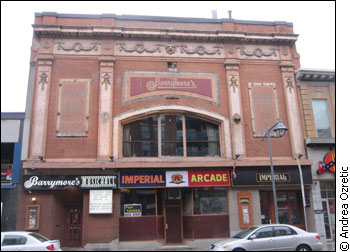
Today Barrymore’s faces all the challenges of a modern nightclub, but is also regarded as an important space that holds many memories for people in Ottawa. Yet despite such strong public sentiments, Barrymore’s has consistently been unable to recapture its 1980s buzz. Even the building—an architectural marvel nearly a century old, formally known as the Imperial Theatre—now shows a weathered façade, deemed an eyesore by many.

The run down Barrymore's exterior.
The Barrymore’s Bank Street exterior embodies faded glory.

The venue has undergone several ownership changes since 1991. Owners have included Eugene Haslam (the man behind Ottawa dance club Zaphod Beeblebrox) and then Randy Lanctot. During the ’90s Barrymore’s still had big-name acts like Radiohead, Bo Diddley and The Commitments. The venue was also used for CD release parties.  Allan Wigney, a journalist currently working on a book about the music scene in Ottawa, says that Lucinda Williams’s performance at Barrymore’s in 1998 was the last big act he recalls there. During the late ’90s and early 2000s, there were local bands with original music performing, but eventually it became more and more cover bands.  Wigney attributes the decline of original music at Barrymore’s to Haslam’s departure in 1999.

The most recent change happened when Montreal-based club owner Vince Simeone purchased Barrymore’s from Randy Lanctot in August 2008. Business at Barrymore’s hasn’t been bustling, and opinions of its latest owner have been lacklustre.

“Without a visionary kind of ownership, it lost its way. New owners who are from out of town, they have tried to put into place the tried-and-true ‘We’ll put in the formula disco night or themed disco night,’ ” says Denis Armstrong, Ottawa Sun entertainment columnist.

“You have a lot of very interesting people who live in Ottawa, a lot of creative and dynamic people, but the city needs to have places where these people can collect and socialize,” Armstrong adds.

Gord Rhodes ran the club from 1978 to 1991 together with his wife, Sherry Rhodes, and her father, Sonny Thomson. Gord is primarily attributed for bringing in the acts.

“I just told them, ‘You’re playing Montreal one night, and two nights later you’re playing Toronto, and you got all these other days off. Why waste your time? Come and do two shows in one night,’” said Gord.

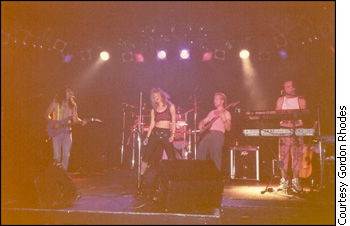
People performing in the 80s on stage at Barrymore's.
The scene in the good old days.

Sherry Rhodes says they had a great team in the office. Bob Jones came in during the later years as the promotions manager. Sherry describes Jones as having “a pure white Mohawk with pure white extensions that went down to his waist.”

“We had three generations of music between us.” Says Sherry, “ Gord was the ’50s and ’60s: he’s a few years older than me. I was the ’70s, and Bob was the ’80s and ’90s.”

She describes her dad, Sonny Thomson, as the night keeper, there to make sure everything ran smoothly. He once saved Canadian legend (and Guess Who veteran) Burton Cummings from being attacked onstage. Cummings signed an autograph for Thomson that night: “Dear Sonny, thanks for keeping me out of the hospital.”

Despite the acts and the crowds that Barrymore’s was able to bring in, the business still had its challenges. “We didn’t have a lot of capital. We would lose money, win on others. We took some big losses; we were never in a really comfortable position,” said Sherry.

‘Without a visionary kind of ownership, it lost its way.’
– Denis Armstrong

Gord says that larger organizations like the NCC and the Jazz and Blues Festivals had larger backings that made it hard for him to compete. He says that he would break the acts into Ottawa’s scene and lose money doing it, and when it was time to bring them in again and make a profit, the festivals would offer the acts big money to play at a free outdoor concert.

“It’s not a fair business at all; I was very fortunate to be able to do as good as I did,” said Gord.

“If I had the chance I would take it [Barrymore’s] back because I think my husband, Gord, was the perfect promoter,” said Sherry Rhodes.

A different nightlife

Armstrong describes an Ottawa nightlife that has changed dramatically since the 1980s. He sees ’80s Night at Barrymore’s as a diluted version of the past.

“It’s sort of like the zombie version, because they were dangerous times, risky times, sexually, socially. There was a lot going on—people having sex in the bathroom, people doing coke on the dance floor—and now we don’t even allow smoking in the clubs,” he said.

Gord says the introduction of stricter drinking and driving laws was a detriment to his business: “It wouldn’t work now. Drinking and driving laws, television’s too good, there’s just too much going on.”

Many echo the idea of by-laws as being detrimental to Barrymore’s.  Says Armstrong, “You know, people would go to these places to have fun, relax, let their hair down. They don’t want to do it while policemen are hanging over their shoulder, breathing down their neck.”

George Syriannas is a relative of Simeone, and the manager at Barrymore’s. He admits that it has been a challenge for reasons including the by-laws.

“The problem is Barrymore’s can fit 1,000, but the city of Ottawa stepped in here with the by-laws and all these other things over the years, and they said, ‘Stairs, exit this, that, and capacity 420 that’s it, that’s all.’ ” says George Syriannas.

‘People in Ottawa like to complain, but then they don’t man up.’ – George Syriannas

As a result of the lower capacity levels, he says that Live Nation, the company that promotes and book bands at venues, will not book them at Barrymore’s, turning instead to bigger locations.  Without the ability to bring in bigger names, Barrymore’s is struggling to attract a crowd.

Also, Syriannas says, people want to see live bands playing their own music at Barrymore’s, but financially Barrymore’s does not benefit from this format. “There are smaller bands and smaller promoters that want to book Barrymore’s, but again it comes down to money. They don’t want to give us any money from the cover.”

Forfeiting cover would not be such a problem if people were spending more at the bar. However, that is not the case, as Syriannas explains.

“Best-case scenario is we put 360 people in here. The average person will spend $10; when you do the math, we sold $3,600 in those two or three hours. Out of that take taxes; take out $1,000 that I need for my staff; take then my cost, and I’m down to nothing.”

Syriannas says the only alternative Barrymore’s can afford is booking cover bands, a popular and successful format used in Byward Market venues. But even this has been a challenge.

He explains that the previous Saturday they widely advertised that Barrymore’s would have a cover band, and that there would be no charge to get in. Fewer than one hundred people showed up.

“People in Ottawa like to complain, but then they don’t man up,” adds Syriannas.

All this contrasts with Barrymore’s in its ’80s heyday. Gord recalls it was not easy back then, either, but they found a way to make it work.

“It was very, very difficult to do it,” says Gord, “getting people to come out and see shows. You know February the 27th; it’s 40 below; we’d have eight or nine hundred people there. It was very amazing. But if you wanted to see the act, you had to come out.”

The rebirth of Nature

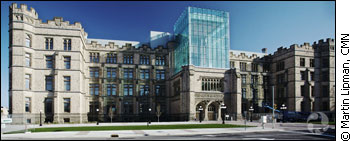
The front of the Canadian Museum of Nature
The renovated Canadian Museum of Nature with its new glass addition, dubbed the Queen’s Lantern.

The Canadian Museum of Nature is unrecognizable. The scaffolding has been dismantled, revealing the Tudor-Gothic–style Victoria Memorial Building underneath; the construction vehicles and construction workers have departed; and a new glass enclosure housing a staircase, dubbed as the “Queen’s Lantern,” graces the front entrance, evoking the building’s early tower (which was removed in 1916 because unstable soil conditions couldn’t support its weight).

The dust has finally settled—literally—as the extensive six-year-long renovations were completed in 2010. And the timing couldn’t have been better.  The year 2010 marked the 100th anniversary of the national historic site and was pegged as the year for bio-diversity. May 22, 2010, the day the museum was unveiled for its grand re-opening, was International Bio-Diversity Day. And on June 30, Her Majesty Queen Elizabeth II and His Royal Highness the Duke of Edinburgh paid a royal visit.

‘It was a large-scale project; it took six years and was the whole building: infrastructure, heritage elements, and new exhibits. It affected every level of the museum.’ – Dan Smythe

“We made it!” says Dan Smythe, the senior media relations officer for the museum. “Looking back at the time, effort and resources it took: It’s finally done.”

Between the grand re-opening and Labour Day weekend, the museum received a record 300,000 visitors. That’s more than the number of visitors the museum saw pre-renovation—annually. Before the renovation, the average number of visitors was between 250,000 and 280,000 per year. By March 2011, the museum will see close to half a million visitors, says Marie Lasnier, director of community services.

Smythe and Lasnier both ascribe the sky-high numbers to the novelty of a re-modelled museum. The years of renovations have created a buzz of anticipation and visitors are excited to rediscover their favourite exhibits, updated and modernized, Smythe says. The renovations allowed for each gallery to be completely re-designed. Every exhibit had to be meticulously taken down. Then, the space was gutted, and re-built from the ground, up. Every gallery had to be re-done, and some galleries—like the RBC Blue Water Gallery—are brand new additions to the museum. The museum also boasts better visitor amenities, like a refurbished boutique and Nature Café.

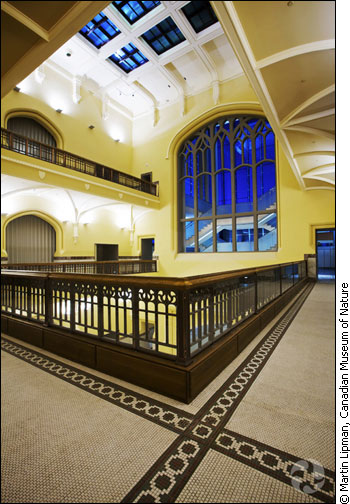
Inside the main stairwell of the Canadian Museum of Nature
The renovation included restoration of heritage elements, like mosaic floors and wood banisters.

“The entire building is more flexible,” says Lasnier. “The new facility provides more space and opportunity than it did before.”

However, despite summer’s intoxicating numbers of visitors, Lasnier points out a trend that could have the museum looking at a ten per cent drop next year: She says that after major museums undergo massive renovations (think of the 2007 Michael Lee-Chin Crystal addition to Toronto’s Royal Ontario Museum) and the initial excitement has worn off, the visitor numbers tend to decline.

In an attempt to counteract this decline, or at least slow it down, the museum is coming up with specialty programming to spark more consistent interest. Group tours, monthly programming, and travelling exhibits are some of what the newly-renovated museum can now offer. The museum showed off its new user-friendly floor plan (and its Halloween spirit) this October with haunted tours put on by the Haunted Walk of Ottawa. Around 4,500 people took part in the tours, a number the pre-reno building never could have accommodated.

Lasnier adds that in the coming months, the museum will be able to offer limited-time, specialty activities. The haunted tours will resume next October; November will be meet-the-scientist month, when the museum shows off its research side by offering public meet-and-greets with its scientists; December and March are when school children have their vacations, so the museum will have more family-oriented activities; and in February, an adults-only Valentine activity will take place, educating visitors on the science of love and attraction.

Lasnier also gives some advance info on travelling exhibits that will arrive at the museum in the summertime: Next summer will be Extreme Mammals, an exhibit showcasing some strange mammals that roamed the earth after the dinosaurs became extinct. The following summer, visitors can expect a jaw-dropping whale exhibit from New Zealand. One significance of these travelling exhibits is that the museum could never have housed them before.

A young visitor reaches up to touch a life-like dinosaur.
Life-sized dinosaurs enchant, in the museum’s vivid displays.

“Travelling exhibits didn’t want to come to the museum before because it was dangerous for the specimens,” Lasnier says. What she’s talking about are the temperature and humidity control systems: The outdated building didn’t have sufficient climate control and couldn’t provide a safe environment for its precious artifacts. Pre-reno, the museum was limited to using display cases for items that needed special care. Some items in the museum’s collections were deemed too valuable or rare to be on public display altogether. Lasnier laments the damage done to one of the mammals on display whose fur literally got eaten by micro-organisms.

As a result, part of the museum’s renovation made a point of updating the electrical, hydro, heating and ventilation systems and reinforcing the building’s structure. Lasnier says the renovations have allowed the museum to offer richer exhibits. More than 1,500 items have been brought out of the storerooms and are now able to be put on display.  Smythe adds that half of the minerals in the Vale Earth Gallery hadn’t been seen by the public—in the remodelled gallery, there are more than 1,000 rocks and minerals on display. The Bird Gallery, which also received some additions, is now home to approximately 400 specimens.

Other projects included landscaping and the restoration of heritage elements, like stained glass windows, wood doors, and mosaic floors.

“It was a large-scale project; it took six years and it was the whole building: the infrastructure, heritage elements, and new exhibits. It affected every level of the museum,” Smythe says. “The challenge now is to deal with its popularity!”

Front page photo by Martin Lipman, Canadian Museum of Nature

Change a-brewing: craft beer discovers Ottawa

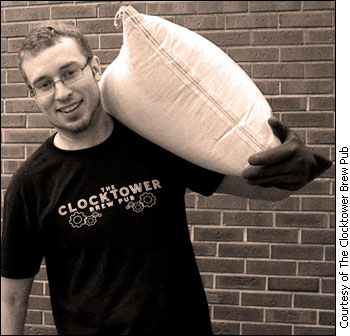
Patrick Fiori
Master brewer Patrick Fiori holds a bag of malt, a main grain ingredient in beer.

The air in here is thick with the chalky smell of barley and wheat, and it is cold—very cold. Welcome to a Saturday afternoon tour of Heritage and Scotch Irish Brewing Ltd., located in a small brick building just off Carling Avenue in Ottawa.

Owner Ron Moir steps around a few puddles on the warehouse floor and, stopping at a table beside large, cone-shaped, stainless steel storage tanks, takes a brown, stubby bottle of Stuart’s Natural Session Ale and pours a gracious amount into a small cup.

“This won’t taste like your typical Alex Keith’s pale,” he says, laughing, and begins to pass samples around.

The beer teases the taste buds, then lingers in the back of the mouth. It’s light—but nowhere near watery—and bitterer than those common swigs of Budweiser or Coors. There’s also this seductive dash of citrus crossed with smooth pine flavouring.

Heritage and Scotch Irish Brewing is the only microbrewery in Ottawa—“micro” meaning it produces fewer than 17,600 hectolitres of beer per year, according to Roger Tottman’s Traveller’s Guide to Great Beer. This arguably is what makes the company, and the 41 others in Ontario like it, special.

‘It’s us against the big guys.’     – brewer Patrick Fiori

“We produce our beer in smaller batches,” explains Moir. “And that’s why it’s called craft beer.” He adds, “Everyone defines craft beer differently but basically it’s beer with lots of flavour: It’s handcrafted. And the decisions around the brewing – bitterness, flavour, aroma – are all made directly in the brewery.”

Craft beer isn’t about making a huge profit, Moir explains; it’s about good, local ingredients and quality.

Quality not quantity

Ontario’s craft beer industry has grown steadily over the last few decades (writes international beer expert Stephen Beaumont in The Great Canadian Beer Guide) and especially in recent years. Craft beer sales rose 46.5 per cent in 2008–2009 at the Liquor Control Board of Ontario (LCBO), the government agency responsible for the sale and distribution of Ontario wine and spirits. Likewise, according to Ontario Craft Brewer (OCB), an organization representing over 25 small brewing operations, sales came to $170 million in 2009, while market share has more than doubled to roughly five per cent since 2002. Plus, OCB calculates new breweries are being created at the rate of about three per year, versus a loss of one per year.

Glass of Beau's beer
Steve Beauchesne of Beau’s All Natural Brewery with a glass of Night Marzen beer, Beau’s seasonal beer for fall.

Today 90 to 100 different brands of Ontario craft beer are offered by the LCBO, says Chris Layton, spokesperson for the agency. “It’s been a craft beer phenomenon over the last five or so years,” he says.

Others, like author Tottman, call it a renaissance, a growing rejection of the “corn syrupy” commercial beers that all taste the same and have dominated the market for too long.

Yet Ottawa’s citizens have been a bit slow to jump on this localized, artistic grain-train. While Heritage first opened in 2000 and the city boasts its own brew pub, Clocktower, it wasn’t until Beau’s All Natural Brewery started up in nearby Vankleek Hill in 2006 that micro-brewing got onto the Ottawa map. Now, within this past year, the capital region has become home to two new craft brews: HogsBack and Kichesippi.

In fact Kichesippi has done so well it is now in the process of taking over Heritage as the new operating corporation. However, it will retain all original staff and continue to produce the Heritage and Scotch Irish labels.

‘It’s local art you can’t taste anywhere else.’ – Kichesippi co-owner Paul Meek

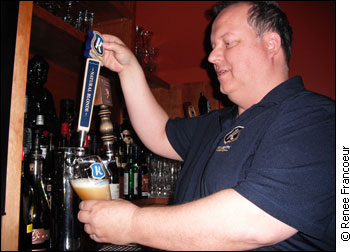
For Ottawa the “best thing that could have happened was Beau’s,” says Patrick Fiori, the brew master at Clocktower Brew Pub on Bank Street. “They’ve stayed true to the ‘go local, go organic’ goal, but they knew how to market and reach people. They’ve challenged people to try other local craft beer.”

Fiori has been working for the past four years at the Bank Street Clocktower brewpub, where five of his brews are available. The same beer can also be found at the other Clocktower restaurants in Ottawa, as well as at the city’s Cornerstone and Steak restaurants.

“If you’d have asked me when I first started here if we’d be where we are today—with all this growth and demand—I’d have laughed at you,” he admits.

As for the threat of competition in the region over the craft beer market, Fiori says they don’t look at it that way. “That’d be pointless. We’re collaborative. It’s us against the big guys who still dominate the market,” he says. “Besides, we’re all making different beer. No two taste the same.”

Move over, wine and cheese

Across the city, on the edge of Chinatown, Zen Kitchen has had Beau’s on tap since the day the restaurant opened in June 2009. They added Kichesippi to the menu as soon as it was available last spring and carry two other local craft beers as well.

“We’re all about buying local, and that extends into our alcohol service,” says Dave Loan, Zen Kitchen’s owner and manager. “Personally, when I travel, I always ask what they have locally on tap. That’s part of experiencing that place.”

Last fall, the restaurant offered Oktoberfest-style meals with beer pairings. “People who tried it loved it, but it’s still a bit tougher of a sell compared to wine,” says Loan.

Dave Loan of the Zen Kitchen
Zen Kitchen’s Dave Loan pours a pint of Kichesippi, one of four local brews available at his restaurant.

Yet beer’s disadvantage to wine over food is changing, claims Colin Jack, a BC beer expert, educator and managing partner of the consulting company Just Here For the Beer, now in its ninth year. The company holds an annual Beer and Wine Festival in Vancouver to celebrate both beverages with food.

“People are just blown away when you show them that craft beer actually goes better with cheese or chocolate because of its different degrees of bitterness. It can also be very palate cleansing, which a lot of people don’t know,” says Jack.

For the face and brains behind Kichesippi, owner Paul Meek, craft brewing is simple: It’s local art you can’t taste anywhere else.

Kichesippi’s name pays homage to the Algonquin language and means “Great River.” It refers to the Ottawa River and tells a story of local history, explains Meek.

“I want one day for people to say, ‘Hey, I’m going to Ottawa, what should I do?’ And the reply will be, ‘Go to the canal; see the Parliament Buildings; have a beavertail and a Kichesippi beer.’”

Related Links

Ontario Craft Brewers

Kichesippi Beer

Hogsback Brewing

Cover image courtesy of Kichesippi Beer Co.

Ottawa poets hit a grand ‘slam’

The stage is set. The lone microphone stands in front of the red velvet curtains, visions of Ottawa’s Byward Market creeping in between the cracks of the drapes. The glittering disco ball hangs high above, its soft, shimmering lights bouncing off the surfaces of the room.

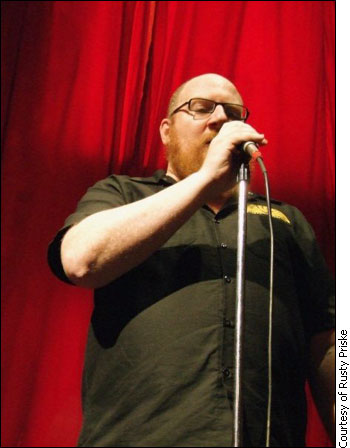
Rusty Priske steps onto the stage. His smiling face is encased by a substantial red beard and set off by a pair of thick, black-framed glasses. His huge boots and ample frame take charge of the small stage. He looks out into the room, and every pair of eyes is staring right back at him.


The audience has filled the Mercury Lounge’s small venue to the brim. People sit on chairs, tables, the floor, even other people. Everyone is welcome: young and old, suits and students, old favourites and first-time performers. The raucousness of the crowd falls into a single cry of “Raise it!” as all fists rise to the air and fall, into a dead silence of anticipation.

Rusty Priske
Burly bard: Rusty Priske performs at the Mercury Lounge.

Priske closes his eye, takes a step back from the microphone, and begins.

To many, the scene would announce a rock concert over a poetry reading. But this is the newest addition to Ottawa’s arts landscape: slam poetry.

Ottawa’s thriving slam poetry scene brings in audiences from all walks of life and consistently sells out shows. Each performer’s passion and individuality inspire a following. Crowds seem devoted to their favourite poets, and the art form flourishes by virtue of the sheer diversity of poets that Ottawa has to offer.

A slam is one part poetry reading, one part competition. But the host is always quick to remind the performers that “the points aren’t the point; the poetry is the point.”

There is room for 12 slam performers to sign up; each has three minutes to perform a poem. Five random audience members are chosen to be judges, and their scoring determines the evening’s winners. The five poets with the highest scores then move on to the next round. Those five poets then each perform again, and the judges determine the winner of the night.

The nightly winners’ scores are recorded, and at the end of the season the poets who had the five highest scores make up the team that represents Ottawa in the national slam competition at the Canadian Festival of Spoken Word. Last year, Ottawa took first place out of 11 teams from across Canada.

And Ottawa said… Let there be slam

Ottawa’s first show dedicated entirely to slam poetry was Capital Slam, which premiered in October 2004. Local poets Elissa Molino and Greg Frankson (who goes by the pen name Ritallin) started Capital Slam. It is now one of Canada’s longest-running poetry slam series.

Frankson says he began performing spoken word poetry in 2003 as a natural step from writing hip hop. “All music is, is poetry to a beat,” says Frankson. He says he was frustrated at having only one venue, The Gold Star Lounge at the African Palace, which would occasionally host poetry slams.

“We thought we could do a pure slam, and that would provide a place for people to practise and to get better,” says Frankson.

Frankson says the first few slams had fairly small crowds, but by the end of the first season they were selling out shows. What started as a monthly show now runs every two weeks because of slam’s popularity with both performers and audiences. Now, along with the Mercury Lounge, Umi Café also has an ongoing slam poetry series, and Avant-Garde Bar and Café Nostalgica have also hosted poetry slams.

‘Raise it!’ the crowd shouts. All fists rise and fall, into a dead silence of anticipation.

Local poet Rusty Priske is the slam master for this season of the Capital Slams. He organizes the slams, and irons out the fine details of making sure everything runs smoothly. Although he went to his first slam only a couple of years ago, he has already made a name for himself in Ottawa’s poetry scene and was part of Ottawa’s team that won at last year’s national competition.

“Right from the first show, I was hooked,” says Priske. He says he was just blown away by the poets he saw at his first slam: people like Steve Sauvé, John Akpata and Kevin Matthews. He says he was moved by what they were doing, but also saw that that connection with the audience was something he could achieve, too.

“I was just taken by what the possibilities were,” he says. “This is just cool.”

Priske says that the Ottawa scene is unusual because it maintains so many different styles. He says that sometimes he sees cities that get their own style, which is distinct and interesting but may influence the way new poets find their own voices. For example, he says, Montréal has a strong musical strain. But at any given Capital Slam show there is a mix of people — from classical poetry backgrounds and hip hop backgrounds, lyrical romantics and political activists

Frankson agrees. He says that the poets are varied, so they bring in varied audiences: “Young professionals, public servants sitting alongside the goths and the hippies. Everybody comes.” This diversity, Frankson says, is what keeps the scene strong and growing.

Greg Frankson
Greg “Ritallin” Frankson can stimulate audiences’ brains.

At the Capital Slams, performers seem mostly to fall between ages 25 and 40.  But the show is all ages; the audience consists of everyone, from teens to people who probably have teenaged grandchildren.

The long and the short of slam

The history of slam starts with Marc Kelly Smith and the Uptown Poetry Slam at the Green Mill in Chicago in the 1980s. It was all about trying something new, taking performance to the next level, having fun, but most of all was about opening up poetry to everyone. Smith says that at the time in Chicago, average poetry shows would draw in 15 people at most, and were “staid, formal, and really quite boring.”

Smith says, “The show’s always been a place where you can push the boundaries of what poetry was meant to be.” The stage of the Green Mill has been graced with everything from classical forms of poetry to group sketches to a 78-year-old woman reciting poetry while performing yoga exercises.

The name “slam poetry” came from Smith watching a Chicago Cubs game. The phrase “grand slam” kept coming up, which brought “slam dancing” to mind and all the energy and power that those ideas contain. He says he was also unsure about whether or not the shows would be a success, so he also liked the idea of calling them slams because “it could be a grand slam, or it could be that we’ll slam the door in your face.”

Since Smith’s first show, in 1984, slam has spread across North America and through Europe as well. Smith says that time and again, he sees people come to one of his slams and then go home and start their own shows that become immensely popular.

But a boys’ club?

Although there is always a level of diversity in the scene, Priske points to the lack of female poets coming to perform at the Ottawa slams. There are usually only one or two female participants per show of 12 performers or more.

Danielle K.L. Gregoire has been a poet in Ottawa for years and one of the first slam masters of Capital Slam. She now lives in Lanark County and organizes the Lanark County Live Poets Society (LiPS). She says there used to be more female performers in Ottawa, but recent seasons have seen fewer and fewer.

“It seems like a self-fulfilling prophecy,” says Gregoire. “The less we see ourselves represented on stage, the less likely women are to get up there.”

‘Young professionals, public servants sitting alongside the goths and hippies. Everybody comes.’ — poet Greg Frankson

Josie Frank just started performing slam poetry this year and says that although she has felt comfortable and safe entering the scene, there have been very few female role models. She says that this could be a result of the type of confessional poetry many women write.

“In my experience, the political poetry tends to receive higher scores, and not many female poets perform political pieces,” says Frank.

This male predominance notwithstanding, Ottawa’s slam poetry scene has grown exponentially.  Five years ago, local poets only had one monthly chance to perform; now there are usually eight or nine monthly opportunities to perform at different shows in the Ottawa area.  Poets from the original slams now run their own shows across town, and the inspiration from the old poets drives an influx of new poets.

“Our poets continue to flourish because of all those opportunities to practise and get better,” says Frankson.


Ottawa’s national slam team (from left: Brandon Wint, Komi Olafimihan, Ikenna Onyegbula, Rusty Priske, Ian Keteku).

A cycle of poetic inspiration

Apart from a Facebook group, the Capital Slam does no promotion. The shows sell out time after time from word of mouth. Priske says, “People know about it; they want it, and I don’t see an end to that.”

Karl Roth, 21, is a university student and a first-time audience member. He says he heard about slam through a friend and decided to sample a Mercury Lounge show.

“It was a great experience; I’ll definitely go back,” says Roth. Although he probably would never perform himself, he says he really enjoyed the show’s relaxed atmosphere and enjoyed the poetry more than he expected.

Priske says that it comes down to getting new people interested and new poets involved. “Once [somebody] goes to one, they walk away with that one thing that they remember,” he says.

The year 2010 promises to be an even bigger year for spoken word, as Ottawa has been chosen to host The Canadian Festival of Spoken Word. Ottawa’s new team will have to defend their title against competitors from all over the country.

But as Frankson says, “The future is bright.”


Related Links

Capital Slam Website

Marc Kelly Smith’s Website

Greg ‘Ritallin’ Frankson’s Website

Dying for a tan? Teens and tanning in Ottawa

It was just supposed to be the one time. She never imagined she’d get hooked, but soon she needed a fix three, even four times a week.

At 15 (Lindsay Fagan says), she became, like many of her peers, a tanning addict.

“It was one of those feel-good things, and people noticed. I got compliments,” explains Fagan, now 21. “I was definitely a regular tanner. I’d almost say borderline obsessed.”

Fagan is one of many Canadians to have fallen in love with indoor tanning as a teen. In 2006, a survey by the Canadian Cancer Society found 27 per cent of females age 16 to 24 used tanning equipment, compared to 15 per cent of those age 25 to 44.


Beauty and the beast: at an Ottawa tanning salon.

Now a Carleton University student and a more moderate tanner, Fagan admits that, back in high school, fitting in was a huge motivation for constant visits to the salon.

“Everyone was doing it. They were all getting really nice tans, and it was really attractive,” she explains. “I remember thinking, ‘Oh my God, like I really want to do it.’”

Risky business

Fagan says she tanned excessively, spending hundreds of dollars, not an easy feat for a teenager earning minimum wage.

Did she ever worry about the risks?

“Not at all,” she says. “It didn’t even cross my mind. I didn’t care. It was all about in the moment.”

Darcy MacLennan, owner of a popular Ottawa tanning salon, says she sees many teens hoping to achieve the look they admire on celebrities and their peers without being aware of the risks.

“Some teens, when they’re 15, don’t make the best judgment calls when it comes to their bodies and themselves,” she observes.

The risks are proven, but today’s teens seem willing to take their chances in order to achieve that perfect golden glow.

‘It’s like drinking. People are going to find a way to do it whether it’s against the law or not’ — Lindsay Fagan

According to the Canadian Dermatology Association, Canadians born in the 1990s are two-to-three times more likely to get skin cancer in their lifetime, compared with those born in the 1960s.

This summer, the World Health Organization labeled tanning beds as a definite cause of cancer in humans, upgraded to the same risk-level as tobacco and mustard gas.

The younger you are when you first tan or burn, the greater the risk. According to the report, tanners are 75 per cent more likely to develop skin cancer later in life if they start before age 30.

Despite such risks, MacLennan says tanning in a salon is the safest route for determined teen tanners.

“Kids, if they can’t tan indoors before the summer or before going on a trip, they go out in the sun and put on their baby oil and then they give themselves first, second, third degree burns,” she says.


Tanning lotion and protective eyewear are two safety measures many tanning salons mandate for their clients.

She says that salons with proper standards offer a safer, supervised tanning experience to those teens determined to tan, no matter what.

Legislating safety?

Parents play a key role in determining the fate of teen tanners. Fifteen is the minimum age for tanning in MacLennan’s salon, and parents must sign a waiver, giving them the final say.

But some feel that stronger measures are needed to advocate for the health and safety of Ottawa’s teenagers. In July 2009, following the Canadian Dermatology Association’s report about the risks of teen tanning, one city councillor proposed making it illegal for tanning salons to serve clients below age 18.

Alex Cullen, Bay Ward councillor, says while education is important, legislation is needed to regulate an activity that can have far-reaching consequences.

“We do want to use education. It informs people. But it’s not just a question of ‘Well, ok, I’m informed now, so I’m going to take an informed risk.’ We’re not only dealing with an impact of people’s health, but the cost to us as taxpayers dealing with those symptoms,” he explains. “It’s in the public interest to eliminate these very preventable risks to a very common form of cancer.”

In October, city council decided to scrap the ban, passing off the decision to the province, where similar legislation is under consideration. Cullen says he is disappointed by the decision but hopes there is room for change in the future.

Where there’s a will…

MacLennan says she feels that a ban would not deter teen tanners because it wouldn’t deal with the root cause. Teenagers will still crave the sun-kissed look and may turn to extreme, unsupervised tanning practices to get it.


Inviting though it seems, harsh tropical sunshine can often cause burns for unsupervised tanners, on vacation.

Citing her own experience, Fagan agrees that teens determined to tan would not be put off by a city-wide ban.

“I think it’s like drinking. People are going to find a way to do it whether it’s against the law or not,” she says. “We crossed the border to Hull when we were too young to drink here. There are places in Quebec that have tanning salons, too.”

She says that teens are motivated because tanning makes you feel good and is a convenient way to boost self-esteem and be “cool.”

“It’s a quick fix. You can’t go out and get liposuction, but you know you can go tanning and get that nice tanned look and feel better about yourself.”


Related links

The Canadian Cancer Society’s position on youth and artificial tanning

The World Health Organization’s 2009 Report


The risky art of graffiti

Some art just will just never be appreciated.

This is what an Ottawa graffiti artist who goes by the name of Bobar says is the real problem with graffiti in the city. At 22 years old, Bobar often spends his days painting beautiful murals on the sides of the usually grey walls of the city. He normally does it without the permission of whoever owns the property.

Two blue fantasy faces smile beneath a bridge.

Bobar explains that the majority of the “art” people see out there is not the good kind of graffiti. Bored teenagers or adults will make crude remarks or spray their artist name on a public wall or park bench. This is not the same as what he does.

“There’s a difference between vandalism and graffiti,” says Bobar.

His graffiti will catch your eye immediately. The swirls of unexpected colours blending together on the side of a wall often form designs within other designs. He will contrast colours, paint with perspective, use optical illusions — anything to make people look twice.

One of his murals will simply look like a car from a distance, but up close there is a cityscape within the car. Get even closer and you might notice that the buildings in the cityscape are actually stereo speakers.

When he paints, Bobar says he chooses his location carefully. The busier the place, the harder it will be to actually paint there, but the more rewarding the completion. Since he does his work quietly and without permission, location is key.

“I try to choose places that people see every day, but they don’t really see,” says Bobar. “People will stop and stare at a wall they’ve passed a hundred times before, because of us.”

An homage to Ray Charles in a Gatineau park.

Ephemeral art

“It is sort of strange. Knowing that I’m doing all this sort of work, and I know this won’t last forever,” says Bobar. “If I’m lucky, maybe it will still be here a year from now.”

According to Bobar, graffiti art differentiates itself from other media because it is in a public place for everyone to see. Bobar’s graffiti art is just as expressive and beautiful as the work he does in his home, and he says that he appreciates using a larger canvas that is visible to more people.

“How is it any different if the Mona Lisa was painted on the side of a bridge instead of a canvas?” Bobar asks. “With graffiti you have a guaranteed audience. A lot of them will probably hate it, but not all of them.”

For larger murals, Bobar will usually work with other graffiti artists he has met over the years. These collaboration pieces are often some of his most impressive, because each artist will bring his or her own style and unique skills into the art. One of Bobar’s longtime friends, an artist who goes by the name Dizzer, says that when they do collaborations, spectators often think the worst.

‘How is it any different if the Mona Lisa was painted on the side of a bridge instead of a canvas?’ —graffiti artist Bobar

“People probably think we’re all in a gang or something when they see us,” Dizzer says. “But none of us are drop-outs, and none of us are living on the streets.”

Bobar currently studies art in college, and is gifted not just in graffiti. He does everything, from sketching to oil painting and even computer-generated 3D art. He has sold some of his work for hundreds of dollars.

Some like it, some hate it

Local residents are divided on the issue.

“It doesn’t bother me,” says Chris Lawrence, 22, an Ottawa citizen who has never met a graffiti artist before. “I’m not sure if I would call it art, but this stuff seems better than the rest. I like the way it looks, sure. I’m just not sure whoever owns this building feels the same way.”

Other residents like Sylvia Harb, 28, say the graffiti makes the neighbourhood seem run-down, no matter how good the artwork. “It doesn’t really matter if it’s beautiful or not. They make this whole area seem trashy,” says Harb.

The City of Ottawa has a very strict policy on graffiti, designating it as illegal. Christine Hartig, the policy officer for the graffiti bylaw in Ottawa, says that no matter the circumstance, graffiti is unacceptable. If people are caught spraying illegally, they can be fined up to $610.

A graffiti-fantasy portal: towers of the sky and sea.

The city has designated specific walls and bridges as legal graffiti zones for anyone to spray on, but Bobar says these walls are not enough for all the graffiti artists in the city.

“The way I see it, I mean, it’s not like we’re hurting anyone. All we’re doing is bringing life into something plain,” says Bobar.

Related Links

Ottawa Graffiti Flickr Album

City of Ottawa – Graffiti Management Program

How To Report Graffiti